Big Thicket National Preserve is a National Park Service (NPS) preserve of 113,114 acres, split into 15 separate units across seven Southeast Texas counties. Its visitor center sits about 7 miles north of Kountze, about 2 hours northeast of Houston. It’s best for short nature trails, carnivorous pitcher plants and paddling Village Creek. Entry is free, but there are no campgrounds, and mosquitoes are fierce in warm months.
At a Glance
- Drive time: about 2 hrs from Houston, 4 hr 45 from Austin
- Entry fee: free; no pass needed
- Hours: trails 24 hrs; visitor center 9 to 5 daily
- Reservations: none needed for day visits
- Dogs: leashed; not in hunting areas Oct to Feb
- Swimming: no swim areas; NPS advises against it
- Camping: backcountry only, free in-person permit
- Best time: March to April, October to November
- Hunting season: Oct 1 to Feb 28, outside Turkey Creek
- Storm damage: Woodlands Trail repairs since Sept 2026
- Run by: NPS, (409) 951-6700
On This Page
- Pitcher Plants and Carnivorous Plants
- Hiking Trails
- Paddling and Fishing
- Birds and Wildlife
- Lance Rosier Unit and the Ghost Road
- Camping
- Best Time to Visit
- What Visitors Say
- Getting There
- Know Before You Go
- Nearby Parks
- FAQ
- Sources and Official Links
Pitcher Plants and Carnivorous Plants
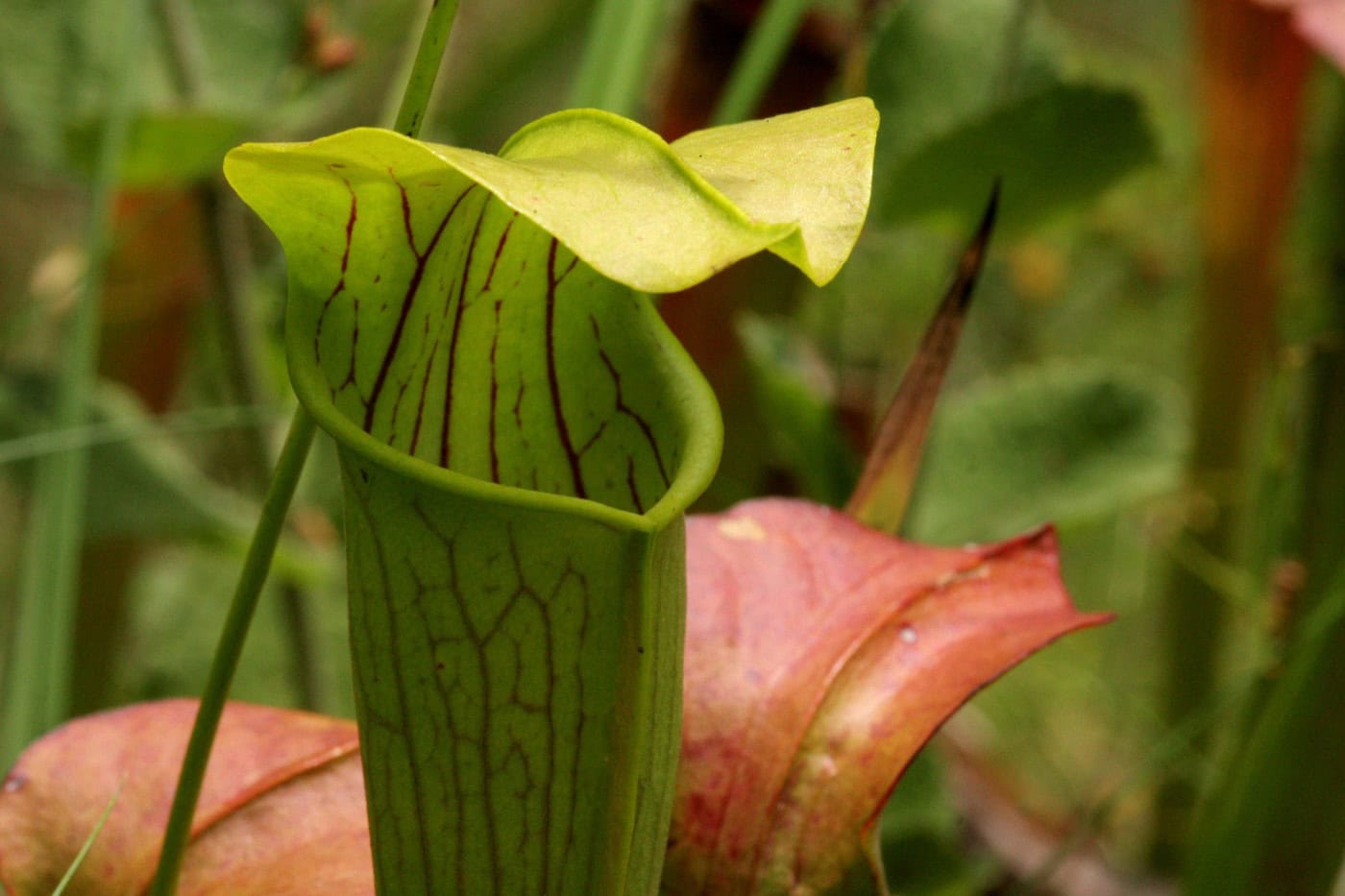
Big Thicket National Preserve is one of the best places in Texas to see carnivorous plants. Four of the six types found in North America grow here: pitcher plants, sundews, bladderworts and butterworts, according to NPS.
The Pitcher Plant Trail in the Turkey Creek Unit is the easiest place to see them, and reviewers call it the best stop in the preserve. The 1-mile loop starts with a quarter mile of paved path and boardwalk through the bog. The trailhead is on County Road 4850, 2 miles south of FM 1943, east of Warren.
Where and When to Look
Each plant has its own season and trail, per NPS.
- Pale pitcher plants: spring and summer on the Pitcher Plant and Sundew trails, with yellow-white flowers in spring
- Sundews: late winter through summer on the Pitcher Plant, Sundew and Longleaf Pine trails. Visitors say they are dime-sized; look in wet, sandy patches
- Bladderworts and butterworts: bladderworts bloom in spring on the Beaver Slide Trail; the butterwort grows on the Pitcher Plant Trail
- Ranger walks: free 1-hour plant walks on the Pitcher Plant Trail in spring and summer. Dates are on the NPS events calendar
Visitors report small pitchers in mid-April and the fullest show in early May. NPS burns the bogs to keep them open; a March 2026 burn scorched the start of the trail, and the plants bloomed again by May. Leaving the trail at any pitcher plant bog is against preserve rules.
Hiking Trails
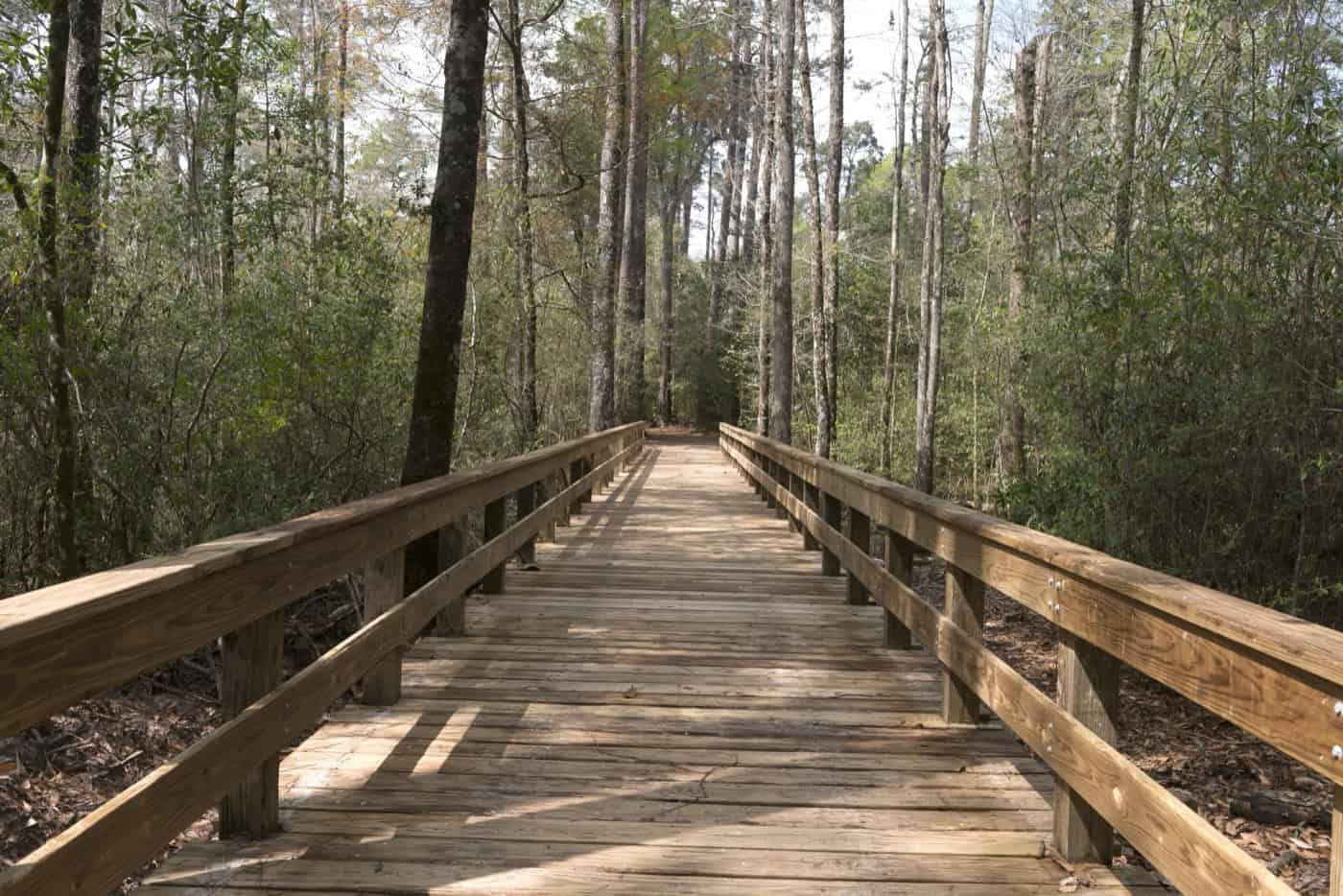
Big Thicket National Preserve has 11 maintained trails and about 33 miles of hiking across five units. Most are short, flat nature walks through pine, cypress and hardwood forest. The Turkey Creek Unit has the most trails and is the only unit closed to hunting.
| Trail | Miles | Unit |
|---|---|---|
| Kirby Nature Trail (cypress loop) | 1.5 to 2.5 round trip | Turkey Creek |
| Longleaf Pine Trail (at the visitor center) | 1 round trip | Turkey Creek |
| Pitcher Plant Trail (boardwalk) | 1 loop | Turkey Creek |
| Sandhill Loop (4.5- to 9.4-mile round-trip hike in) | 1.4 loop | Turkey Creek |
| Turkey Creek Trail (point to point) | 14 one way | Turkey Creek |
| Sundew Trail (paved inner loop) | 0.3 to 1 loop | Hickory Creek Savannah |
| Beech Woods Trail | 1.5 round trip | Beech Creek |
| Woodlands Trail (storm repairs under way) | 3 to 5 loop | Big Sandy Creek |
| Big Sandy Trail (bikes and horses allowed) | 14.7 round trip | Big Sandy Creek |
| Beaver Slide Trail (no signs) | 1 round trip | Big Sandy Creek |
| Birdwatchers Trail (Trinity River view) | 0.75 round trip | Menard Creek |
Miles as NPS lists them on its trail pages; the 2017 brochures still linked online give older, longer distances in the Big Sandy Creek Unit.
Trail Tips
A few things make these trails easier.
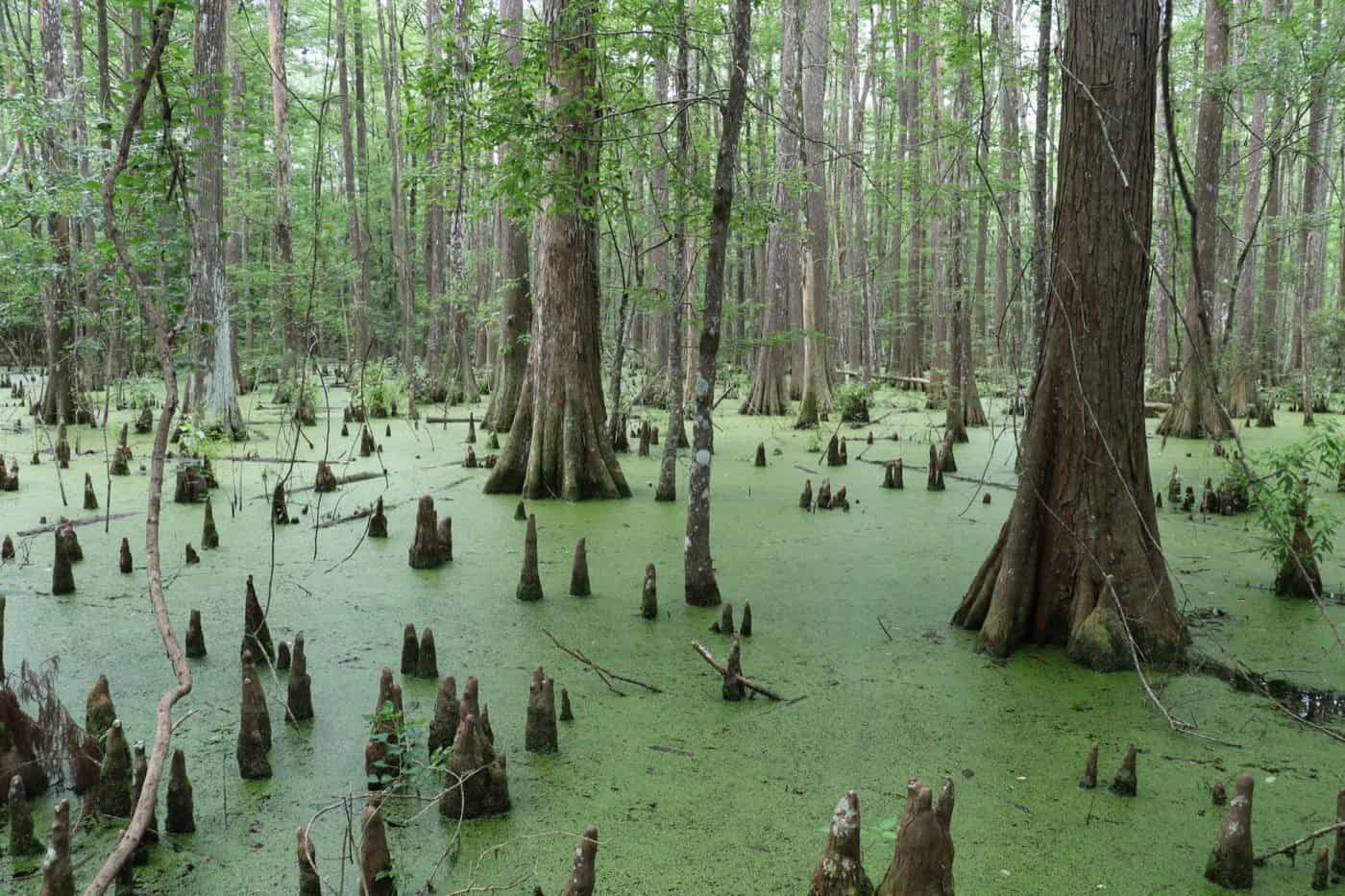
- Kirby Nature Trail: reviewers single out the Cypress Loop, with big old cypress trees and knees. The trailhead is on FM 420, 2.5 miles east of US 69/287
- Turkey Creek Trail: runs from FM 1943 near Warren to the Kirby Nature Trail. The part south of the Pitcher Plant Trail floods after heavy rain, and a hiker reported a bridge out in November 2025
- Accessible trails: the Sundew inner loop, the first quarter mile of the Pitcher Plant Trail and the Kirby inner loop. Boardwalks get slick after rain, and a reviewer reported rotting boards on the Sundew boardwalk in October 2026
- Bikes and horses: only on the Big Sandy Trail and park roads. The paved 7-mile Kountze Hike & Bike Trail links Kountze to the visitor center
- Water: drinking water is only at the visitor center; most major trailheads have vault toilets
Paddling and Fishing
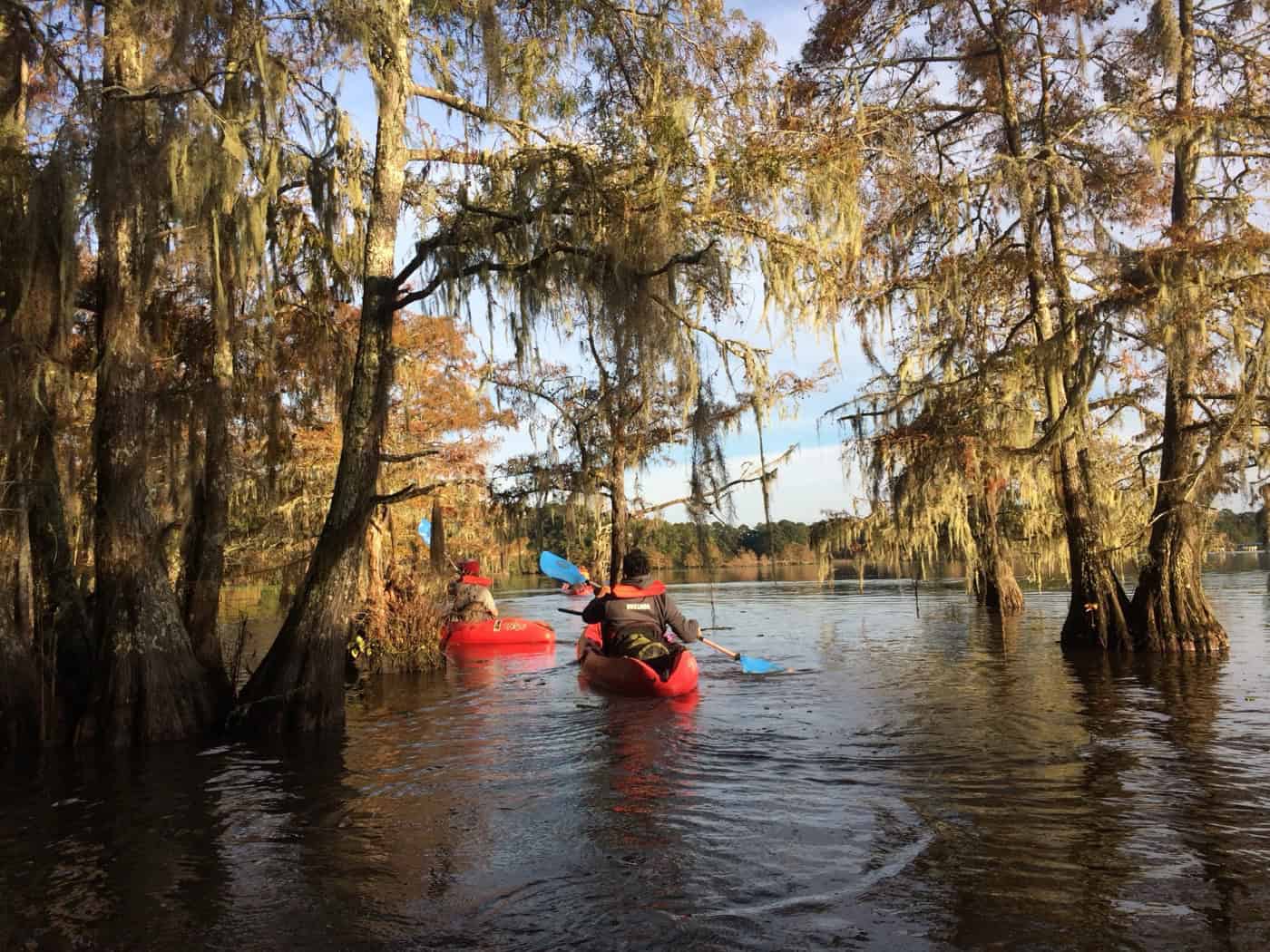
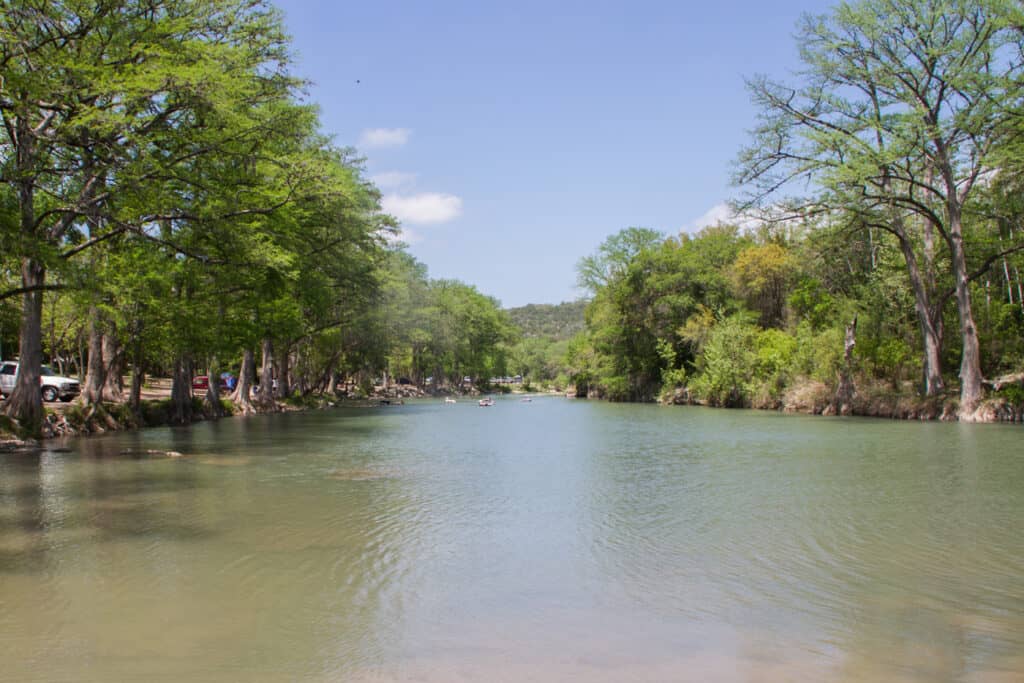
Paddling is the best way to see the cypress sloughs and white sandbars of Big Thicket National Preserve. Three official Texas Paddling Trails run through it, and Village Creek, a free-flowing creek with no dams, is the most popular.
- Village Creek Paddling Trail: 21 miles one way, from FM 418 to Village Creek State Park, in four stretches. The shortest, TX 327 to Baby Galvez Road, is 2.1 miles and under 3 hours, which NPS suggests for beginners and families
- Cooks Lake to Scatterman: a 4.8-mile signed route through a cypress-tupelo slough, from the Saltwater Barrier boat ramp on Bigner Road in Beaumont
- Collier’s Ferry to Lake Bayou: 7 miles round trip from Collier’s Ferry Park in Beaumont
- Neches River: launches at McQueens Landing, the Evadale ramp on US 96 and the Confluence launch. Tides and dam releases affect the river
- Rentals: NPS doesn’t rent boats or run shuttles. Village Creek State Park and Martin Dies, Jr. State Park rent boats for use inside those parks
- Ranger canoe trips: free, with canoes and life jackets provided, usually 3 to 4 hours. Book up to 2 weeks ahead at (409) 951-6700
Water levels: check the USGS gauge for Village Creek near Kountze before going. NPS calls under 3 feet low, with exposed sandbars and logs, and 10 feet or more high and dangerous. It read 2.49 feet on October 31, 2026.
Fishing: allowed in all preserve waters with a Texas fishing license (under 17 exempt). NPS recommends the Neches River, Village Creek, Turkey Creek and Pine Island Bayou, and warns that women who may become pregnant and children under 12 shouldn’t eat largemouth bass, crappie or gar from Village Creek because of mercury.
Birds and Wildlife
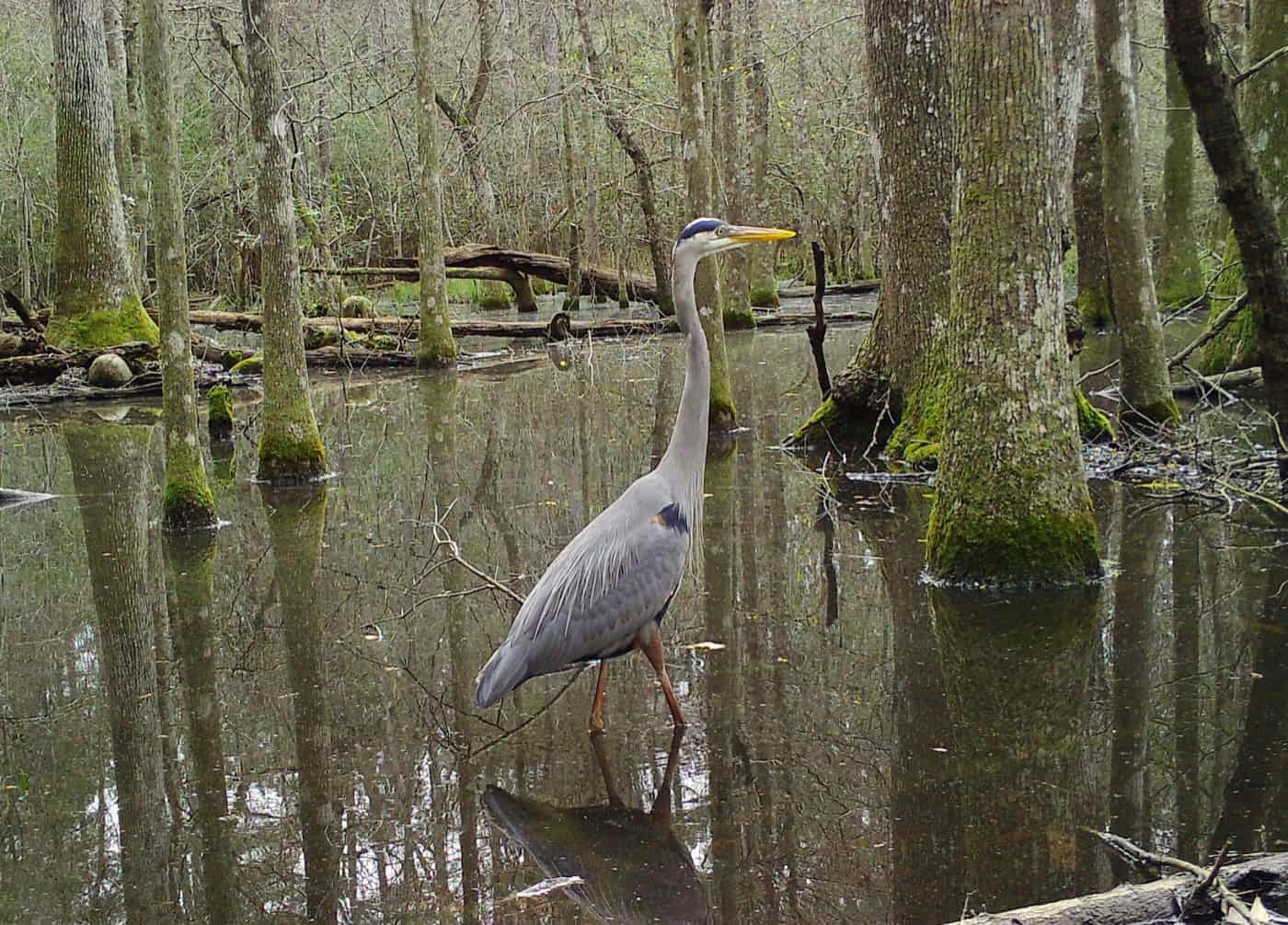
NPS has documented nearly 300 bird species in Big Thicket National Preserve, and 74 of them nest here. Spring and fall migrants pass through on the Central and Mississippi flyways, and the dense woods make birding by ear important.
- Sundew Trail: Bachman’s sparrow, brown-headed nuthatches and woodpeckers
- Kirby Nature Trail: thrushes and Swainson’s warbler
- Solo Tract: Henslow’s sparrow in spring migration, 285 yards east of the visitor center on FM 420 at a tan gate
- Cooks Lake paddling trail: prothonotary warbler, osprey and swallow-tailed kite
Four venomous snakes live here: coral snakes, rattlesnakes, copperheads and cottonmouths, and all snakes are protected. A visitor saw a copperhead on the Pitcher Plant Trail in May 2026. Alligators are present but rarely seen, and there’s no established black bear population.
Lance Rosier Unit and the Ghost Road
The Lance Rosier Unit is the largest in the preserve: 24,828 acres of swamp and bottomland forest between Kountze, Saratoga and Sour Lake. It has no trails or facilities, but an unpaved driving route reaches its main sights.
- Route: Rosier Park Road off FM 770, then Teel Road, past the Teel Road cypress swamp, the “Bridge to Nowhere” over Little Pine Island Bayou and the privately owned Teel Cemetery
- Self-guided tour: in the NPS App; download it for offline use, since mobile signal is spotty
- Roads: often impassable after rain, with signs often missing. A visitor in October 2026 said the drive needs four-wheel drive
- Hunting: open to hunting October 1 to February 28, so wear orange
The Ghost Road
The Ghost Road, or Bragg Road, is not part of the preserve. It’s a Hardin County road on an old railroad bed between Bragg and Saratoga, with a Texas Historical Commission marker at FM 787, about 1 mile north of Saratoga. Stories of the Saratoga Light draw night visitors. Reviewers describe about 8 miles of straight dirt and gravel that turns muddy after rain, and most didn’t see the light.
Camping
Big Thicket National Preserve has no campgrounds. All camping is primitive backcountry or sandbar camping with a free permit: no water, restrooms or other facilities, reached on foot or by boat. Car and RV camping isn’t allowed, even at trailheads.
Permits and Seasons
Where camping is allowed changes with hunting season.
- Permit: free, in person only at the visitor center during business hours, the same day or up to 14 days ahead. Someone in the camping party must pick it up
- March 1 to September 30: camping is open in most units and on Village Creek and Neches River sandbars
- October 1 to February 28: hunting season limits camping to the Turkey Creek Unit and Neches River sandbars
- Never: the Hickory Creek Savannah Unit, the Pine Island Bayou and Menard Creek corridors, within 1,000 feet of the Pitcher Plant Trail, or the Kirby Nature Trail area south of Village Creek
Camp Rules
NPS sets these rules for every trip.
- Distance: at least 500 feet from roads, trails, structures and preserve boundaries, and 100 feet from water unless on a sandbar
- Group size and stays: up to 8 people; up to 14 nights in a row and 28 a year
- Fires: allowed with dead and down wood from the preserve, except during burn bans
- Water: bring all drinking water; NPS doesn’t recommend creek water because of possible heavy metals
- Glass and dogs: no glass on waterways or sandbars; leashed dogs may come along
Campgrounds Near the Preserve
For drive-up camping, NPS points to two Texas Parks and Wildlife Department (TPWD) state parks and two U.S. Army Corps of Engineers campgrounds, Sandy Creek and Magnolia Ridge.
- Village Creek State Park: about 21 miles (30 minutes) south in Lumberton, at the end of the Village Creek Paddling Trail: 25 water and electric sites ($16), 15 hike-in primitive sites ($10) and a cabin. Three trails closed for storm damage in October 2026, and the park closes January 8 to 13, 2027, for a hunt
- Martin Dies, Jr. State Park: about 40 miles (50 minutes) northeast near Jasper: more than 200 campsites, most with water and electric, plus screened shelters and cabins. The Hen House 100 and 200 loops are closed through February 2027
Best Time to Visit
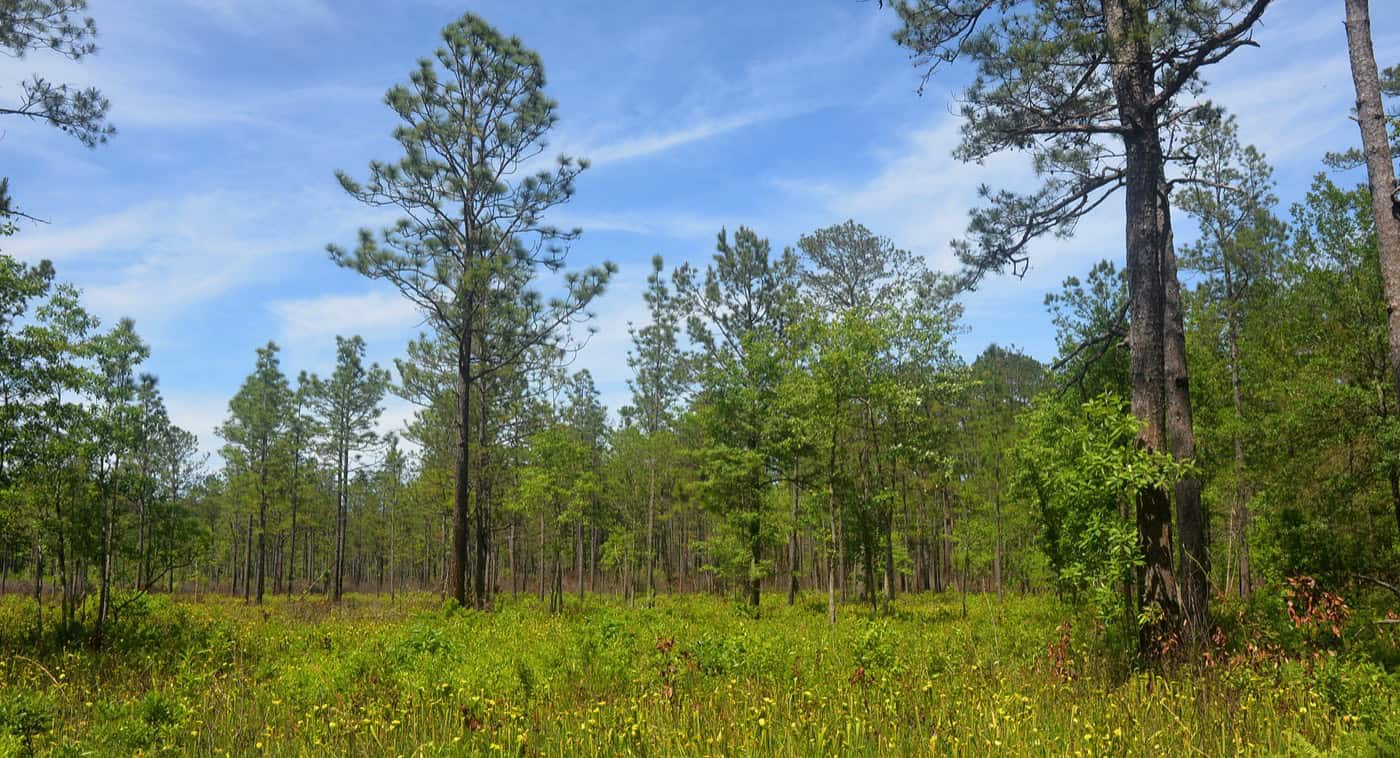
March, April, October and November are the best months at Big Thicket National Preserve, with mild weather and fewer mosquitoes. Late April into May is peak pitcher plant season, but heat and bugs build through May.
- Spring (March to May): comfortable in March and April, with pitcher plants, wildflowers and migrating birds peaking from late April into May
- Summer (June to September): hot and humid, with thunderstorms and the worst mosquitoes; hurricane season peaks in late summer
- Fall (October to November): pleasant weather and fall color in the Beech Creek Unit in late November. Hunting season starts October 1
- Winter (December to February): mild, with the fewest bugs; sundews start growing in late winter. Hunting season runs through February 28
What Visitors Say
Big Thicket National Preserve averages 4.7 stars across 316 Google reviews from November 2024 to October 2026, spread over 15 listings for the visitor center, trails and units. Visitors love the quiet, and mosquitoes cause most of the low ratings.
- Staff: rangers and volunteers at the visitor center get the most praise, for maps, hike plans and permit help
- Pitcher Plant Trail: the most recommended stop, with thousands of pitchers in May
- Crowds: nobody describes crowds; hikers often see few or no other people
- Mosquitoes: the top complaint, May through September, with bites through clothing
- Storm damage: bridges and boardwalks keep washing out, especially on the Woodlands and Turkey Creek trails
- Getting around: units are far apart, trailhead signs are small and dirt roads get muddy after rain
Getting There
Start at the visitor center at 6102 FM 420, Kountze, where FM 420 meets US 69/287, about 7 miles north of Kountze and 30 miles north of Beaumont. From Houston, take I-10 east to US 90, follow it through Liberty, then take TX 326 north to Kountze and US 69/287 north to FM 420.
Drive times to the visitor center:
- Houston: about 2 hours
- Beaumont: about 45 minutes
- Austin: about 4 hours 45 minutes
- Dallas: about 4 hours 45 minutes
- San Antonio: about 5 hours 25 minutes
A few things to know before driving out:
- No single entrance: the 15 units are separate pieces of land. Kirby and the Pitcher Plant Trail are near the visitor center; the Big Sandy Creek Unit trails are near Dallardsville in Polk County
- GPS: NPS warns that GPS often sends drivers into the unpaved Lance Rosier Unit. Navigate to a named trailhead and call (409) 951-6700 to confirm directions
- Dirt roads: trailhead roads get muddy after rain; reviewers say a regular car does fine when dry
- A car is a must: there is no public transportation
Know Before You Go
Big Thicket National Preserve is free and open around the clock, but its scattered units, hunting season and bugs take some planning.
- Fees and passes: no entrance fee or pass needed, and backcountry permits are free. The visitor center doesn’t sell the annual or senior pass, and its store is cashless. See NPS fees
- Booking: no reservations for day visits. Backcountry permits are in person only; ranger canoe trips book by phone
- Hours: roads, trails and waterways are open 24 hours. The visitor center is open 9 a.m. to 5 p.m. daily, closed Thanksgiving, December 25 and January 1. After dark, everyone needs a permit or license, such as a camping permit or fishing license
- Hunting season: October 1, 2026, to February 28, 2027, in every unit except Turkey Creek. Wear orange in hunting areas, including the Big Sandy Trail. See NPS hunting
- Dogs: on a leash of 6 feet or less, and not in the visitor center or at ranger programs. The NPS pets page welcomes dogs on all trails, but preserve rules close hunting areas to pets in hunting season, so from October to February keep dogs to the Turkey Creek Unit or call ahead
- Swimming: no designated swimming areas, and NPS doesn’t recommend swimming. Drowning is the leading cause of death in the preserve, and sandbars can end in steep drop-offs. Rope swings are banned
- Bugs and snakes: bring strong repellent, long pants and closed shoes; mosquitoes, ticks and chiggers are worst near standing water. Watch for snakes in warm months
- Alcohol and drones: alcohol is banned at trailheads, day-use areas and hunting areas in season. Drones need written approval
- Storms: Tropical Storm Edouard (September 2026) damaged Big Sandy Creek Unit trails. All trails are open, but Woodlands Trail repairs continue
- What to bring: water, repellent, a paper map from the visitor center and offline maps in the NPS App
Check conditions first: storms, floods, prescribed burns and trail work close trails and parking lots on short notice. Check the NPS current conditions page or call (409) 951-6700 before driving out.
Nearby Parks
Three other TrekTexas guides are within about 1 hour 45 minutes of the Big Thicket visitor center.
- Lake Livingston State Park: about 64 miles west, for pier fishing, lakefront camping and shady trails
- Sea Rim State Park: about 77 miles south, for Gulf beach camping, crabbing and marsh paddling
- Sam Houston National Forest: about 78 miles west, for camping at Double Lake and hiking the Lone Star Hiking Trail
- More parks within reach of Houston: Parks Near Houston
FAQ
Is Big Thicket a national park?
No. It’s a national preserve run by NPS. Big Thicket and Big Cypress became the first two national preserves on October 11, 1974; unlike national parks, preserves allow hunting, trapping and oil and gas extraction by permit.
Why is the Big Thicket called a biological crossroads?
Southeastern swamps, eastern hardwood forests, central plains, pine savannas and dry sandhills meet here. UNESCO named the preserve a Biosphere Reserve in 1981.
Is Big Thicket worth visiting?
Yes, for short nature walks, carnivorous plants, birding and paddling. The units are far apart, so most visitors see one or two in a day.
Where should first-time visitors start?
At the visitor center, then the Kirby Nature Trail and the Pitcher Plant Trail, all in the Turkey Creek Unit, which is closed to hunting all year.
Sources and Official Links
Facts in this guide were last checked in October 2026 against these sources.
- Big Thicket National Preserve visitor information (NPS)
- Fees and passes (NPS)
- Hiking and maps (NPS)
- Backcountry camping (NPS)
- Paddling and ranger paddle programs (NPS)
- Carnivorous plants and birds (NPS)
- Current conditions and hunting (NPS)
- Superintendent’s Compendium (NPS rules)
- Lance Rosier Unit driving tour (NPS)
- Village Creek near Kountze gauge (USGS)
- Village Creek State Park and Martin Dies, Jr. State Park (TPWD)
- Bragg Road (Ghost Road) marker (Texas Historical Commission)
Featured photo: NPS, Wikimedia Commons (Public domain)
Get More Texas Outdoor Adventure Tips
Subscribe to get more places to explore in the great outdoors of Texas. We’ll never share your email. Unsubscribe any time.