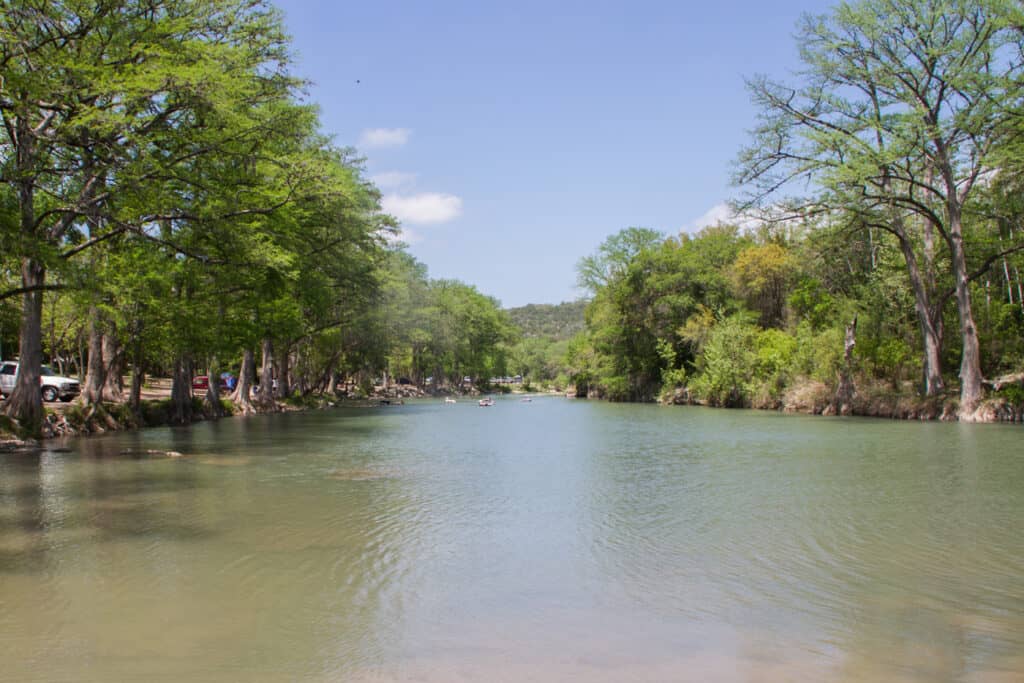
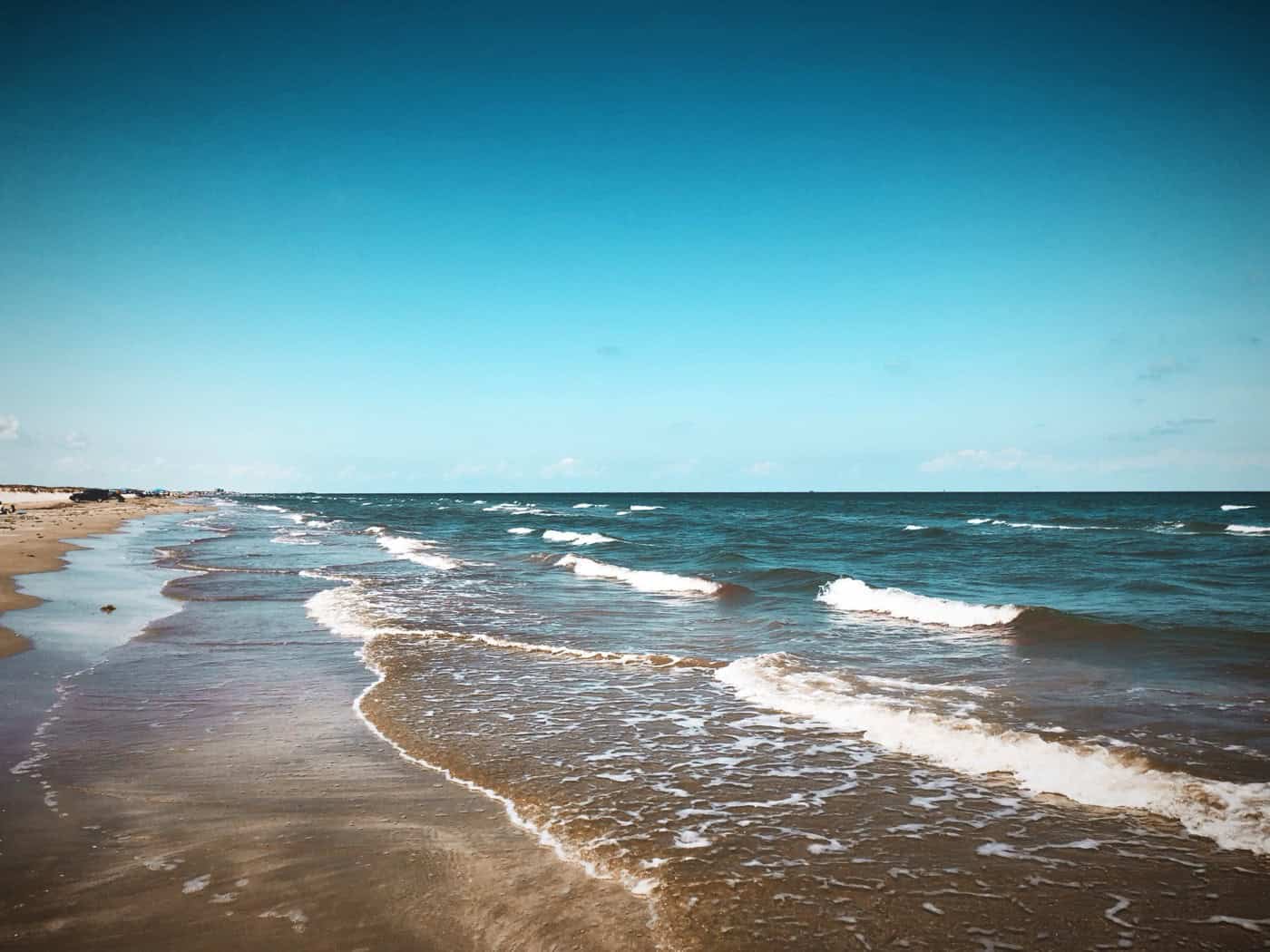
Mustang Island State Park covers more than 5 miles of Gulf of Mexico beach in Nueces County, about 14 miles south of Port Aransas and 35 minutes from downtown Corpus Christi. It’s about 2 hours 50 minutes from San Antonio and best for beach days, camping on the sand and surf fishing. The park often reaches capacity, so reserve a day pass before driving out.
At a Glance
- Drive time: about 2 hr 50 from San Antonio, 4 hr 10 Austin
- Entry fee: $7 ages 13 and up; 12 and under free
- Hours: gate 8 a.m. to 10 p.m.; office 8 to 5
- Reservations: day pass advised; park often fills
- Dogs: yes, on a leash, beach included
- Swimming: yes, Gulf beach; no lifeguards
- Camping: 48 water/electric sites, 50 beach sites
- Best time: fall and spring; winter is quietest
- Beach driving: allowed; 4×4 advised in soft sand
- Run by: TPWD, (361) 749-5246
On This Page
- The Beach and Swimming
- Driving on the Beach
- Camping
- Paddling Trails
- Fishing
- Birding and Wildlife
- Best Time to Visit
- What Visitors Say
- Getting There
- Know Before You Go
- Nearby Parks
- FAQ
- Sources and Official Links
The Beach and Swimming
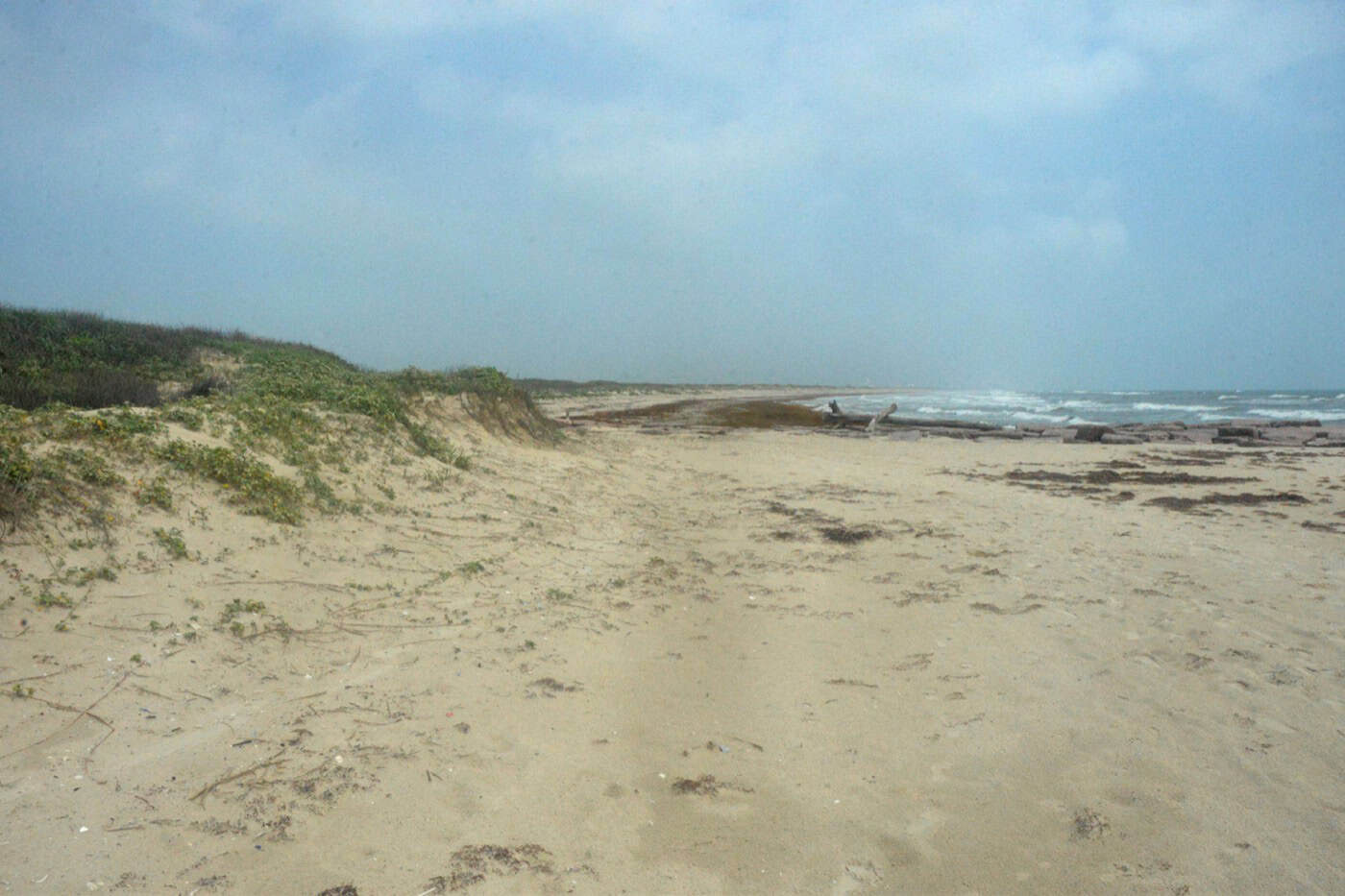
The Gulf beach is the reason most people come to Mustang Island State Park, and swimming is allowed along it. Texas Parks and Wildlife (TPWD) posts no lifeguards, and the park map warns of stingrays, jellyfish and dangerous undercurrents.
TPWD lists more than 5 miles of coastline, with swimming, surfing, beachcombing and sandcastle building as the main activities. Visitors describe soft sand, clear green water on calm days and a beach that’s cleaner and quieter than the free beaches near Port Aransas.
- Waves: some days are gentle enough for small children, others bring rough surf and undertow. Red flags mean stay out
- Seaweed and tar: sargassum seaweed washes up heavily in late spring and summer, and many visitors found tar balls on the sand in June and July 2025
- Jellyfish: they wash up on the sand often. Visitors suggest bringing vinegar for stings
- Facilities: a beach bathhouse with hot showers sits near headquarters, outdoor rinse showers help with sand, and portable toilets line about 2 miles of beach
- Shade: visitors count only a few covered tables at the beach. Bring an umbrella or canopy, and expect steady wind
- Beach wheelchairs: the park lends two for free. Ask staff on arrival
Water Quality
The Texas General Land Office samples the water at several stations inside the park through its Texas Beach Watch program. Check its map for bacteria advisories before swimming, and read TPWD’s swimming safety tips.
Driving on the Beach
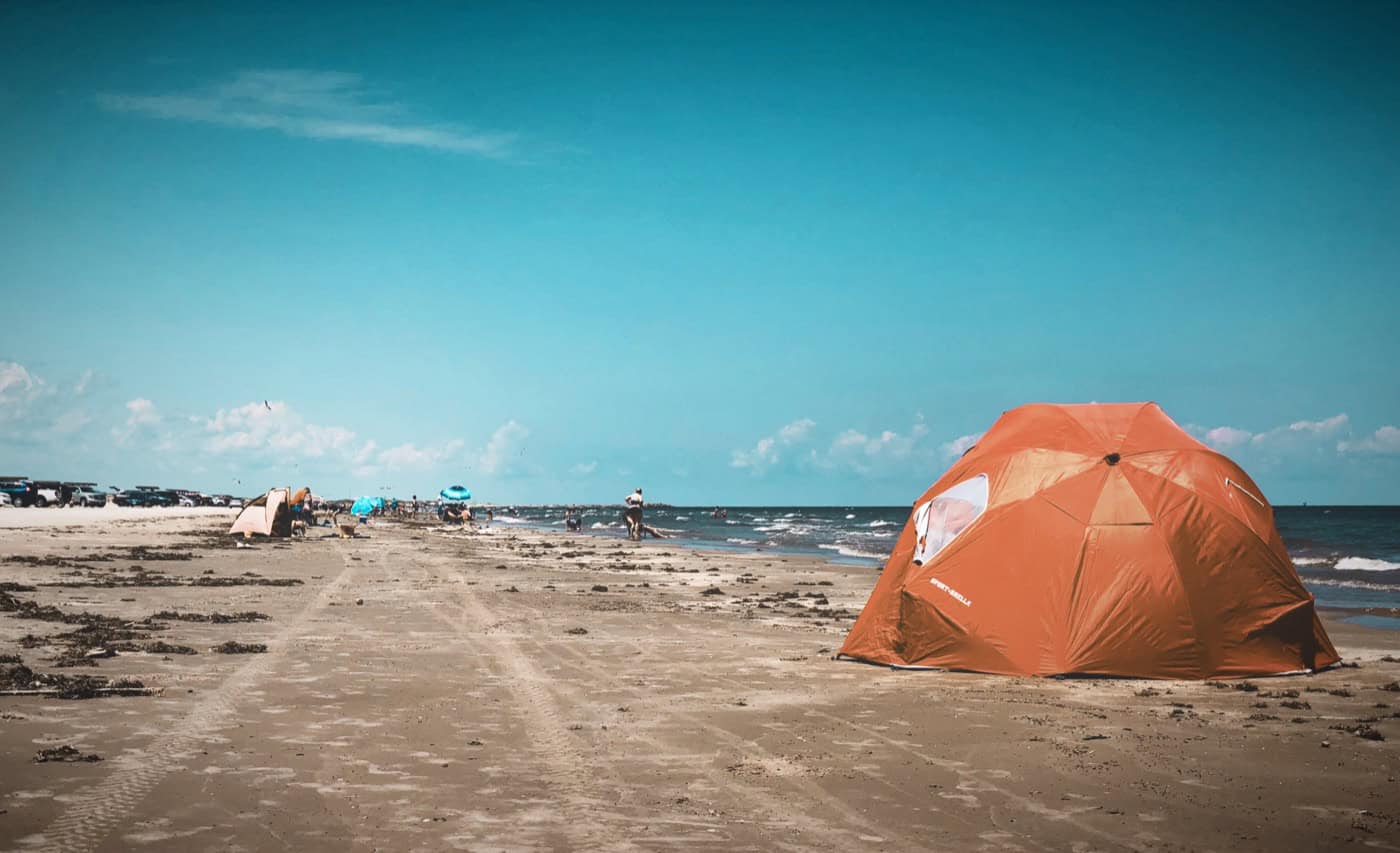
Visitors can drive and park on the beach at Mustang Island State Park, and it’s one of the main reasons people choose it. Vehicles must stay off the dunes and on established routes, and park staff don’t pull out stuck vehicles.
- Soft sand: in September 2024 TPWD advised that only 4×4 vehicles drive on the beach because of soft sand. Visitors report 2WD cars stuck in the dry sand near the beach entrance, while packed sand near the water holds most cars
- No-drive zone: visitors describe a stretch near the day-use parking lot that is closed to vehicles, which suits families with small children
- Sea turtles: Kemp’s ridley sea turtles nest on the island from April to late July. Drive slowly, obey the posted speed limit and report any turtle to park staff
- ATVs: not allowed on the beach or park roads
- Tides: high tides can push water up to the dunes. Check the tide before parking for the day
Camping

Mustang Island State Park has two kinds of camping: drive-up primitive sites on the beach and water and electric sites in a campground behind the dunes. The park has no cabins or screened shelters.
Campsite Types
Prices are TPWD’s nightly rates, plus the daily entry fee.
- Primitive beach sites (50 sites, $13): unmarked spots along a 1.5-mile stretch of beach, with parking on the sand beside the tent. “Primitive” means no water or electric hookups. Restrooms sit 50 yards to 1.5 miles away, plus portable toilets. Small campfires are allowed on the beach
- Water and electric sites (48 sites, $25): back-in sites with water and 50-amp electric, a picnic table, a grill and a shade shelter. They sit about 400 yards behind the dunes, near restrooms with hot showers. No fire rings; cook on the grill
- Up to 8 people per site of either type
The reservation site lists 46 water and electric sites, all back-in with room for rigs up to 65 feet. There are no sewer hookups; a dump station is on the park map.
Reservations and Camp Rules
The water and electric sites book up on weekends and holidays, sometimes even in winter. The beach sites work differently.
- Booking: water and electric sites open 5 months ahead at 8 a.m., online or at (512) 389-8900
- Beach sites: TPWD lists them as first come, first served; the reservation site says to check with the park on arrival day. Late arrivals can self-pay for one night and check in at headquarters by 9 a.m. to extend
- Weather closures: TPWD closes the beach sites at times for high tides and storms (coastal flooding closed them before Memorial Day 2026). Call the park before driving out
- Late arrivals: campers with reservations arriving after the office closes call the park before 5 p.m. for instructions
- Stay limit: 14 days
Campers love sleeping by the waves on the beach but warn about wind, sand in everything and crabs at night. In the hookup campground, many call the sites close together, like a parking lot with grass and no shade. Several say to check which side the hookups are on before backing in, and to bring a long hose and cord. Some sites hold water for days after heavy rain.
Paddling Trails
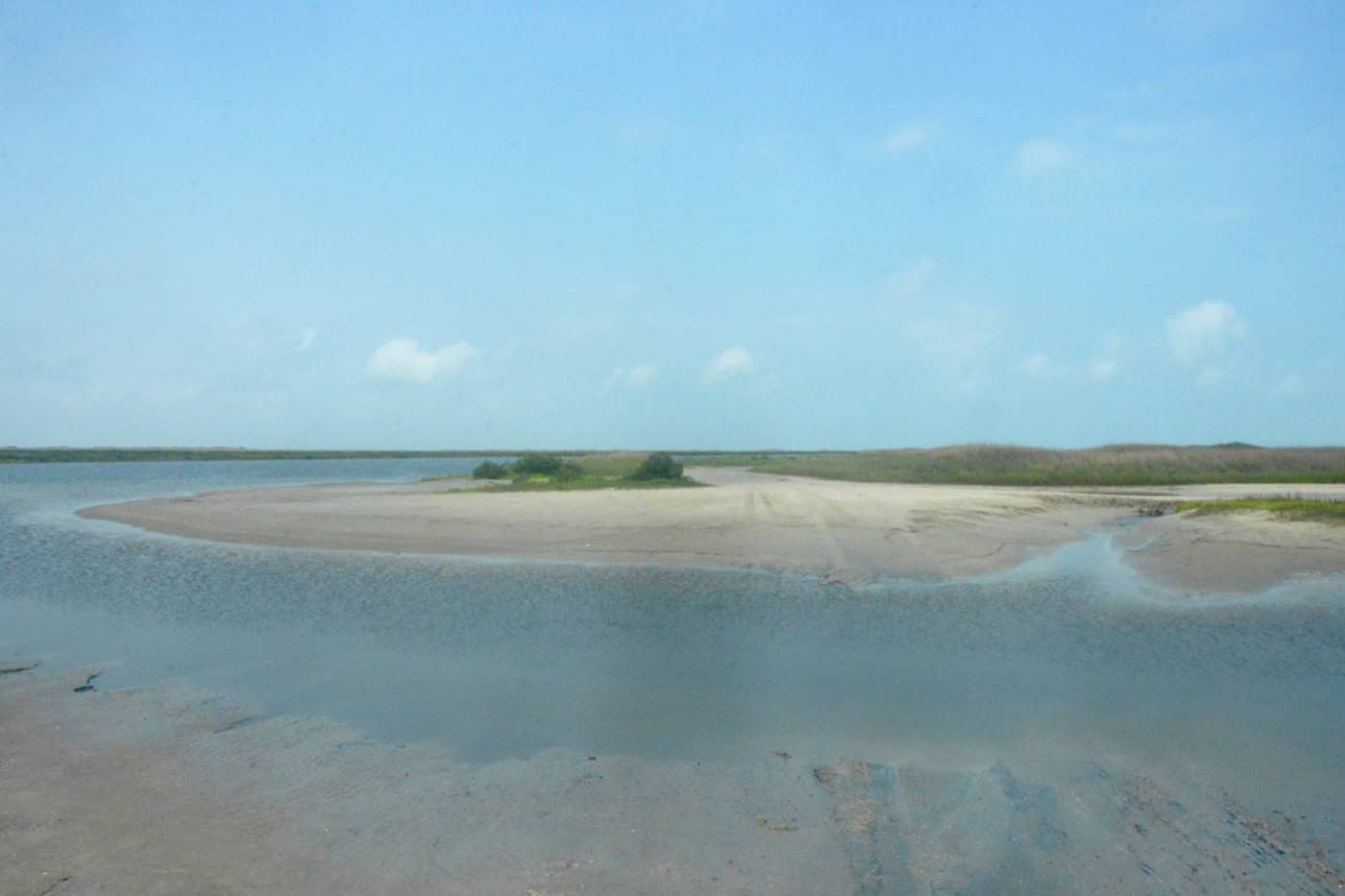
The Mustang Island Paddling Trail has three marked kayak routes on the calm bay side of the island, about 20 miles in all. They wind through shallow flats, seagrass and small islands in Corpus Christi Bay, away from the Gulf surf.
| Trail | Miles | Route |
|---|---|---|
| Ashum Trail (starts in the park) | 6.8 | Fish Pass to Wilson’s Cut; shuttle needed |
| Shamrock Loop | 5.24 | loop from Wilson’s Cut; no shuttle |
| North Trail | 8.5 | Island Moorings Marina to Wilson’s Cut |
Mileages are from TPWD’s Mustang Island Paddling Trail page, which also has the trail map (PDF).
Launches and Tips
- Fish Pass launch: inside the park, on the bay (west) side of Highway 361 by the Fish Pass bridge. The access road is sandy, and TPWD recommends high clearance
- Wilson’s Cut launch: on private land with the entrance left open, down a sandy, rutted road
- Island Moorings Marina: off Piper Boulevard in Port Aransas, with about a 50-yard carry. Call ahead at (361) 749-4100
- Tides and boats: some routes are too shallow to float at low tide. Check tides, and watch for powerboats and oyster reefs
- Rentals: the park doesn’t rent kayaks. TPWD lists outfitters in Aransas Pass, Portland and Rockport on the paddling trail page
Fishing
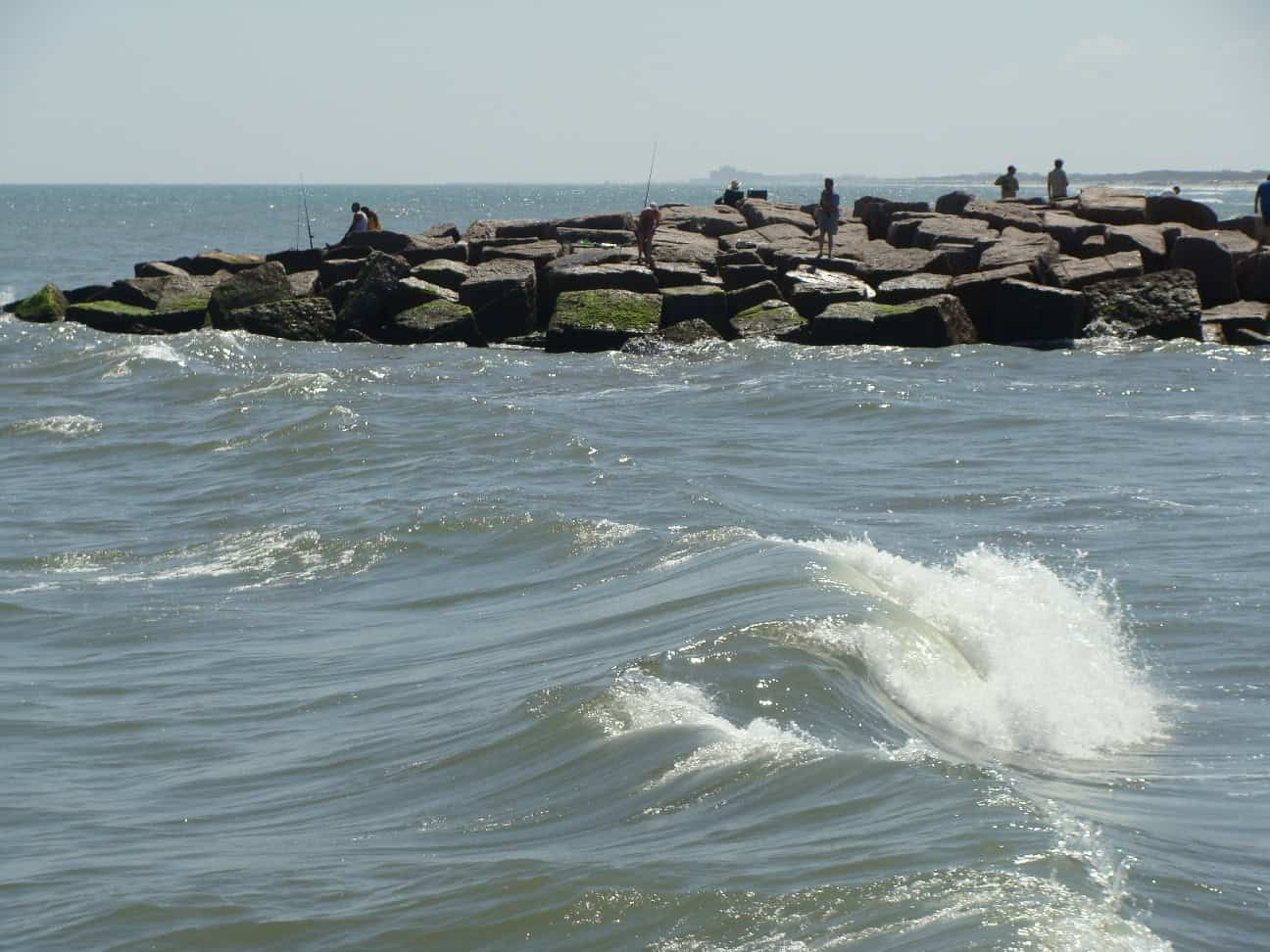
Mustang Island State Park has three ways to fish: surf fishing from the Gulf beach, casting from the Fish Pass jetties and wading or kayak fishing in Corpus Christi Bay. TPWD lists spotted seatrout, redfish, black drum and flounder.
- License: no fishing license is needed inside a Texas state park, but bag and length limits still apply. On jetties and other structures, TPWD allows pole-and-line only, two poles per person
- Jetties: the jetties at Fish Pass sit south of the beach camping area. Visitors call the rocks uneven and slick, so wear shoes with grip
- Fish Pass bay side: regulars call it a favorite spot, reached by a caliche road that works when dry
- Fishing line: TPWD asks anglers to put used line in the trash bins
Birding and Wildlife
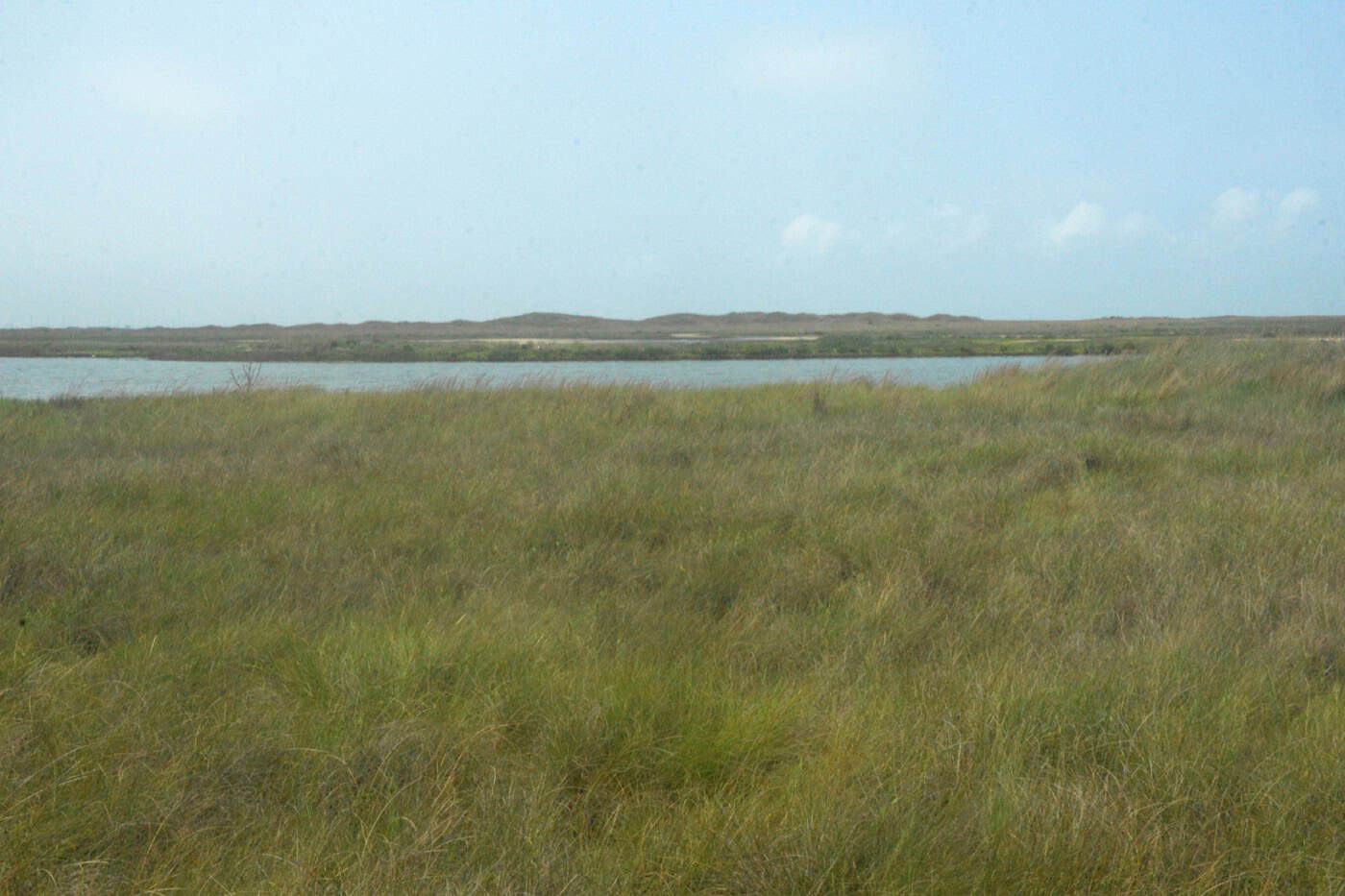
More than 400 bird species have been recorded on this part of the coast and in the park, and spring and fall migration are the best times to look. Cold fronts can bring “fall-outs,” when tired migrants land in large numbers.
- Bay side: the tidal flats fill with shorebirds in winter, along with pelicans, loons, grebes and ducks on the bay
- Aplomado falcons: TPWD released 65 captive-bred falcons at the park in 2012 and 2013, and birders still photograph them nearby
- Sea turtles and dolphins: Kemp’s ridley turtles nest from April to late July, and juvenile green sea turtles feed around the jetties. Visitors also report dolphins offshore
- Beach life: ghost crabs, hermit crabs and shells. Some visitors find sand dollars at low tide
- Ranger programs: TPWD runs programs on birding, stargazing, beachcombing and nature walks; none were listed in late October 2026. Check the park events page
TPWD lists no named hiking or biking trails, so walking here means the beach, the park roads and the bay shore. Stay off the dunes.
Best Time to Visit
Fall and spring are the best seasons at Mustang Island State Park, with migrating birds and fewer crowds than summer. TPWD names spring and summer as the busy season and suggests the cooler months for a quieter beach.
- Spring (March to May): spring break brings the first busy weekends, mostly families rather than a party crowd. The water was about 69°F in March 2025, and seaweed starts to build by April
- Summer (June to August): July averages a high of 94°F. Weekends and holidays fill the park; one visitor found it full by 10 a.m. on Memorial Day Saturday 2025. Expect seaweed, jellyfish and mosquitoes at the campground
- Fall (September to November): fewer people than summer and fall bird migration. Visitors find September and October weekdays nearly empty
- Winter (December to February): January averages a low of 46°F, with wind and cold fronts. It’s the quietest season and the best for bay-side shorebirds
What Visitors Say
Mustang Island State Park averages 4.7 stars across 938 Google reviews from November 2024 to October 2026, and 4.7 stars across 6,161 reviews overall. Most visitors call it a clean, uncrowded beach with good showers.
- Clean beach: the most common praise, in more than 100 reviews. Many say the entry fee keeps it cleaner than nearby free beaches
- Beach driving: people like parking beside their gear and camping next to the car
- Crowds: most find it quieter than Port Aransas, but holiday weekends fill the park
- RV campground: the main source of low ratings. Sites are close together with no shade, and a few campers had 50-amp outlets that didn’t work
- Seaweed, jellyfish and tar: common complaints in late spring and summer
- Wind and bugs: the wind rarely stops, and mosquitoes are worst at the campground
- Flooding: heavy rain leaves the day-use lot and some campsites under water for days, as in May 2025 and May 2026
- Staff and facilities: rangers are praised in about 50 reviews. Visitors in 2026 noted a new bathhouse and upgraded headquarters
Getting There
Mustang Island State Park is on State Highway 361 between Port Aransas and the Padre Island part of Corpus Christi. From Corpus Christi, take SH 358 southeast across the JFK Causeway onto Padre Island, turn left on SH 361 at the second traffic light and drive 5 miles north to headquarters on the right.
From the north, the free Aransas Pass to Port Aransas ferry crosses to the island; then drive about 14 miles south on SH 361, past the Fish Pass bridge. Drive times to park headquarters:
- Corpus Christi: about 35 minutes
- San Antonio: about 2 hours 50 minutes, via I-37 and Corpus Christi
- Austin: about 4 hours 10 minutes via the Port Aransas ferry, plus the ferry wait, or about 4 hours 20 minutes via Corpus Christi
- Houston: about 4 hours 25 minutes via the ferry, plus the wait, or about 4 hours 40 minutes via Corpus Christi
- Dallas: about 7 hours 25 minutes via the ferry, or about 7 hours 35 minutes via Corpus Christi
A few things to know before driving out:
- Full park: when the park reaches capacity, staff turn cars away at the gate. A day pass guarantees entry
- Ferry wait: the drive times above don’t include the wait at the ferry landing; the Corpus Christi route avoids it
- Supplies: the park store at headquarters sells drinks, T-shirts and gifts, and visitors mention ice and boogie boards. Bring food from town
Know Before You Go
Capacity, weather and the Gulf itself shape a trip to Mustang Island State Park. These fees, rules and tips matter most.
- Fees and passes: $7 a day for ages 13 and older; children 12 and under get in free. The fee is per person, not per car, and the Texas State Parks Pass covers it. Camping fees are extra. Confirm current fees on the TPWD fees page
- Booking: TPWD says the park often reaches capacity and highly recommends reserving a day pass, online or at (512) 389-8900. Day passes go on sale up to one month ahead. Campsites open 5 months ahead
- Hours: the gate is open 8 a.m. to 10 p.m.; after 10 p.m. only overnight guests stay in the park. Headquarters is open 8 a.m. to 5 p.m., with a self-pay station when the fee booth is closed
- Dogs: allowed on a leash, on the beach too, but not in public buildings. Pick up after them
- Alcohol and glass: public drinking or display of alcohol is prohibited, and glass containers aren’t allowed on the beach
- Fires: small campfires on the beach only. TPWD bans beach fires in high winds, as it did in March 2025
- Other rules: stay off the dunes, and leave metal detectors at home; they aren’t allowed
- Safety: no lifeguards. In an emergency, call 911 first, then alert park staff
- What to bring: shade, sunscreen, water, bug spray, vinegar for jellyfish stings, trash bags and a cart for gear
Check conditions first: high tides and storms close the beach sites, heavy rain floods the campground, and the park fills on busy weekends. Check the Mustang Island State Park page or call (361) 749-5246 before driving out.
Nearby Parks
The Coastal Bend has more beaches, bays and lakes within about an hour and a half of Mustang Island State Park.
- Goose Island State Park: about 43 miles north via the Port Aransas ferry, for bay-side camping, fishing, birding and the Big Tree live oak
- Padre Island National Seashore: about 20 miles south, for 66 miles of undeveloped coastline (no TrekTexas guide yet)
- Lake Corpus Christi State Park: about 62 miles northwest, for lake water sports and a lighted fishing pier (no TrekTexas guide yet)
- More parks within reach of San Antonio: Parks Near San Antonio
FAQ
Is Mustang Island part of Padre Island?
No. Mustang Island is its own 18-mile barrier island, just north of Padre Island. Padre Island National Seashore is about 35 minutes south of the state park.
Does Mustang Island State Park have cabins?
No. TPWD lists only water and electric campsites and primitive beach sites. The nearest lodging is in Port Aransas and Corpus Christi.
Do the RV sites have sewer hookups?
No. The 48 sites have water and 50-amp electric only, and the park has a dump station.
Is a fishing license needed at Mustang Island State Park?
Not inside the park. Texas waives the license for fishing from state park property, but bag and length limits still apply.
Is it worth paying when free beaches are nearby?
Visitors split on this. The $7 fee buys hot showers, restrooms, rinse stations and what most reviewers call a cleaner, quieter beach; the free beaches nearby have none of those facilities, according to visitors.
Sources and Official Links
Facts in this guide were last checked in October 2026 against these sources.
- Mustang Island State Park (TPWD), with current alerts
- Entrance fees, campsites, water and electric sites and primitive beach sites (TPWD)
- Park map (PDF), nature and history (TPWD)
- Mustang Island Paddling Trail and paddling trail map (PDF) (TPWD)
- Free fishing in state parks (TPWD)
- Texas State Parks reservations and day passes
- Texas Beach Watch (Texas General Land Office)
Featured photo: Jonathan Cutrer, Wikimedia Commons (CC BY 2.0)
Get More Texas Outdoor Adventure Tips
Subscribe to get more places to explore in the great outdoors of Texas. We’ll never share your email. Unsubscribe any time.