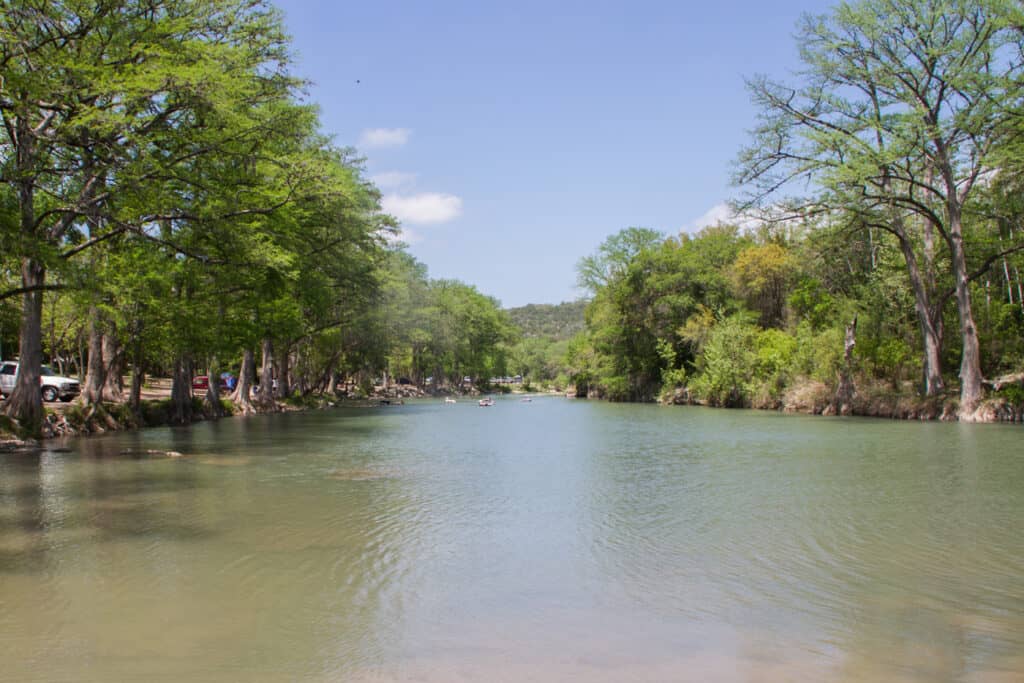
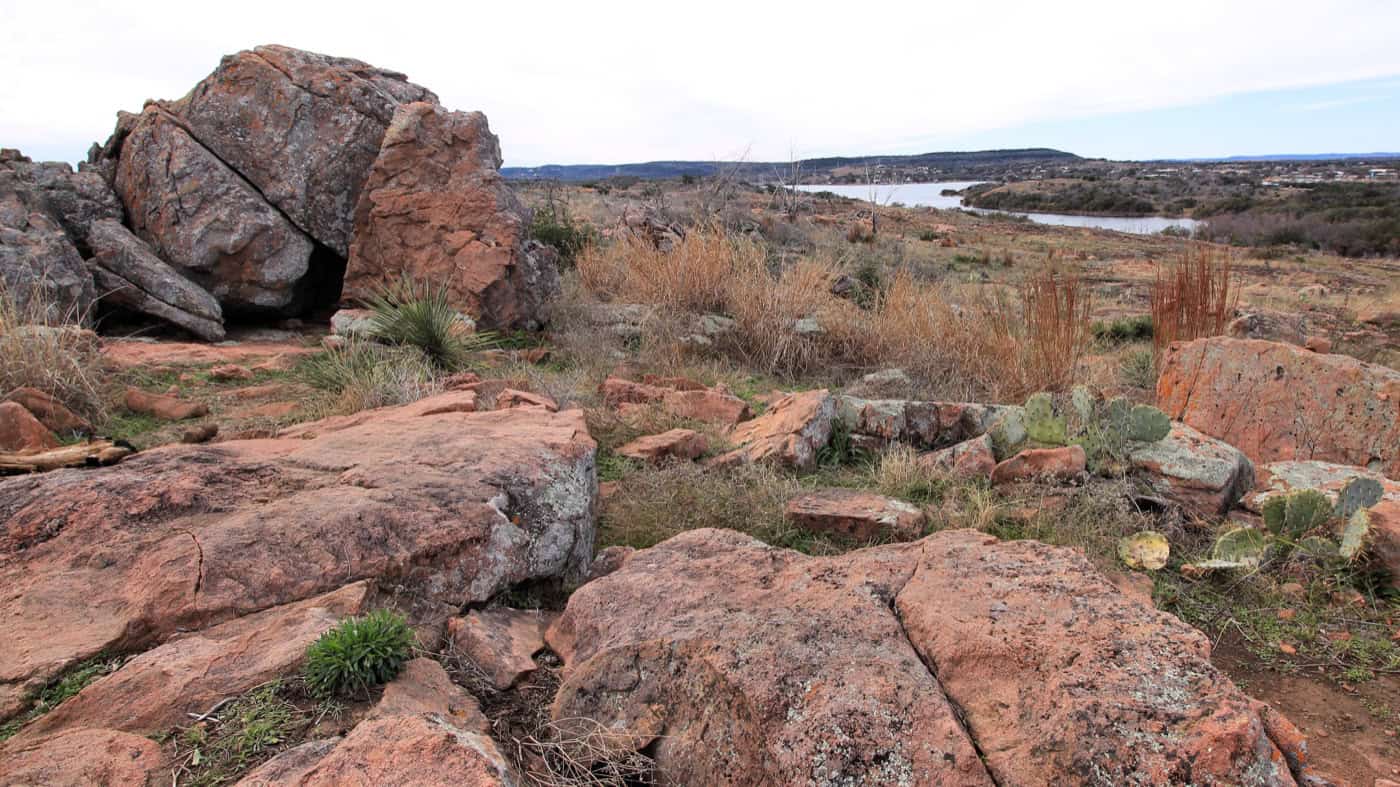
Inks Lake State Park sits on a constant-level lake in the Hill Country of Burnet County, 9 miles west of Burnet and about 1 hour 25 minutes northwest of Austin. It’s best known for swimming, paddling and cliff jumping at Devil’s Waterhole. Texas Parks and Wildlife (TPWD) says day passes and campsites sell out every weekend and holiday, so reserve ahead.
At a Glance
- Drive time: about 1.5 hrs from Austin, 2.25 from San Antonio
- Entry fee: $7 adults; 12 and under free
- Hours: 6 a.m. to 10 p.m.
- Reservations: day pass advised; weekends sell out
- Dogs: yes, on a 6-foot leash; not in swim areas
- Swimming: yes, rocky granite entries; no lifeguards
- Camping: about 170 sites, 22 cabins; no full hookups
- Best time: March to May; weekdays for fewer people
- Hunt closures: set December and January dates
- Cell signal: 5G on AT&T and T-Mobile, per visitors
- Run by: TPWD, (512) 793-2223
On This Page
- Devil’s Waterhole and Cliff Jumping
- Swimming at Inks Lake
- Paddling and Boat Rentals
- Hiking Trails
- Fishing
- Camping
- Cabins
- Best Time to Visit
- What Visitors Say
- Getting There
- Know Before You Go
- Nearby Parks
- FAQ
- Sources and Official Links
Devil’s Waterhole and Cliff Jumping
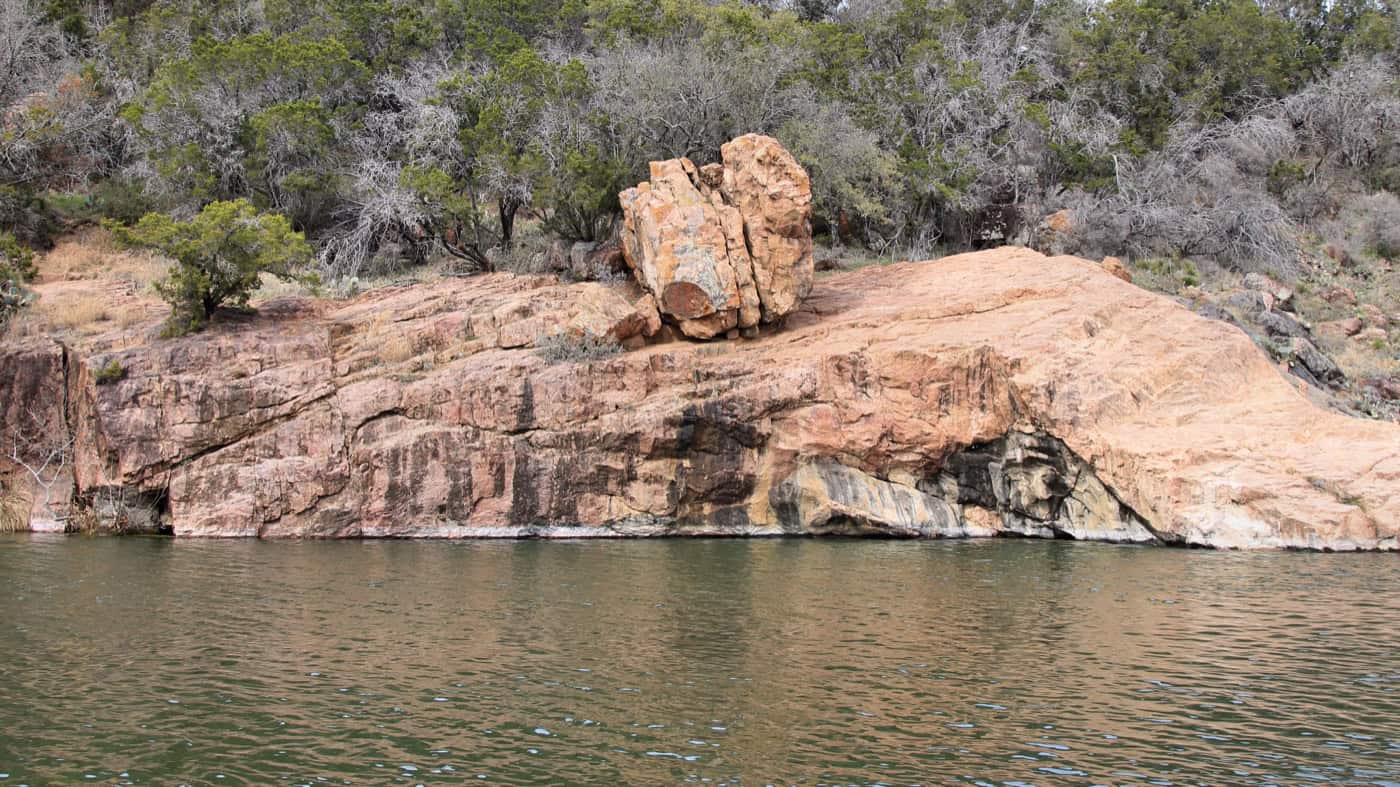
Devil’s Waterhole is the signature spot at Inks Lake State Park: a cove ringed by pink granite ledges where Spring Creek flows into Inks Lake. People swim, float and jump from the rocks here, and TPWD lists it as swim at swimmers’ own risk, with no lifeguards.
Getting to the Waterhole
The 0.2-mile Devil’s Waterhole Nature Trail runs from the parking lot to the water. It starts steep, then levels off, and there’s no handrail on the slope. Paddlers can also reach it by kayak or canoe from the rental area near the park store, which skips the parking problem entirely.
Jumping Rules
TPWD posts no ban and no formal jumping rules. The official park map says jumping off the rocks at Devil’s Waterhole is at the jumper’s own risk and warns that underwater hazards exist in the lake. TPW Magazine describes the highest point as a granite outcrop of about 40 feet, with a lower ledge about 20 feet below it. The park superintendent asks visitors to judge their own ability.
Tips from Visitors
Visitors who know Devil’s Waterhole repeat the same advice.
- The rocks are slippery on the climb up. Water shoes help on the rocks and the lake bottom
- Check the landing area before every jump, and jump feet first
- It isn’t a spot for weak swimmers, and no lifeguards are on duty
- The parking lot holds only about 20 cars, and vehicles parked partly on the road get towed. Arrive early on summer weekends or paddle in
- Poison ivy grows around the edges
Upstream, the Valley Spring Creek Trail passes a small waterfall that TPWD says makes a good swimming spot when the creek is flowing. In dry spells the pools can go still, and TPWD warns visitors to watch for algae blooms in stagnant water.
Swimming at Inks Lake
Swimming is allowed in Inks Lake, but no lifeguards work at the park. Texas state park rules limit swimming to designated areas, so visitors should ask at headquarters where swimming is open that day.
- Entries are rocky granite, not sand. Water shoes make a big difference
- Visitors usually describe the water as clear, though algae can coat the bottom in summer
- TPWD posts algae-bloom guidance; check the notice at the park store before swimming, especially with dogs
- Swim areas sit close to the boat ramp and paddle-boat rentals, so watch for boats
Paddling and Boat Rentals
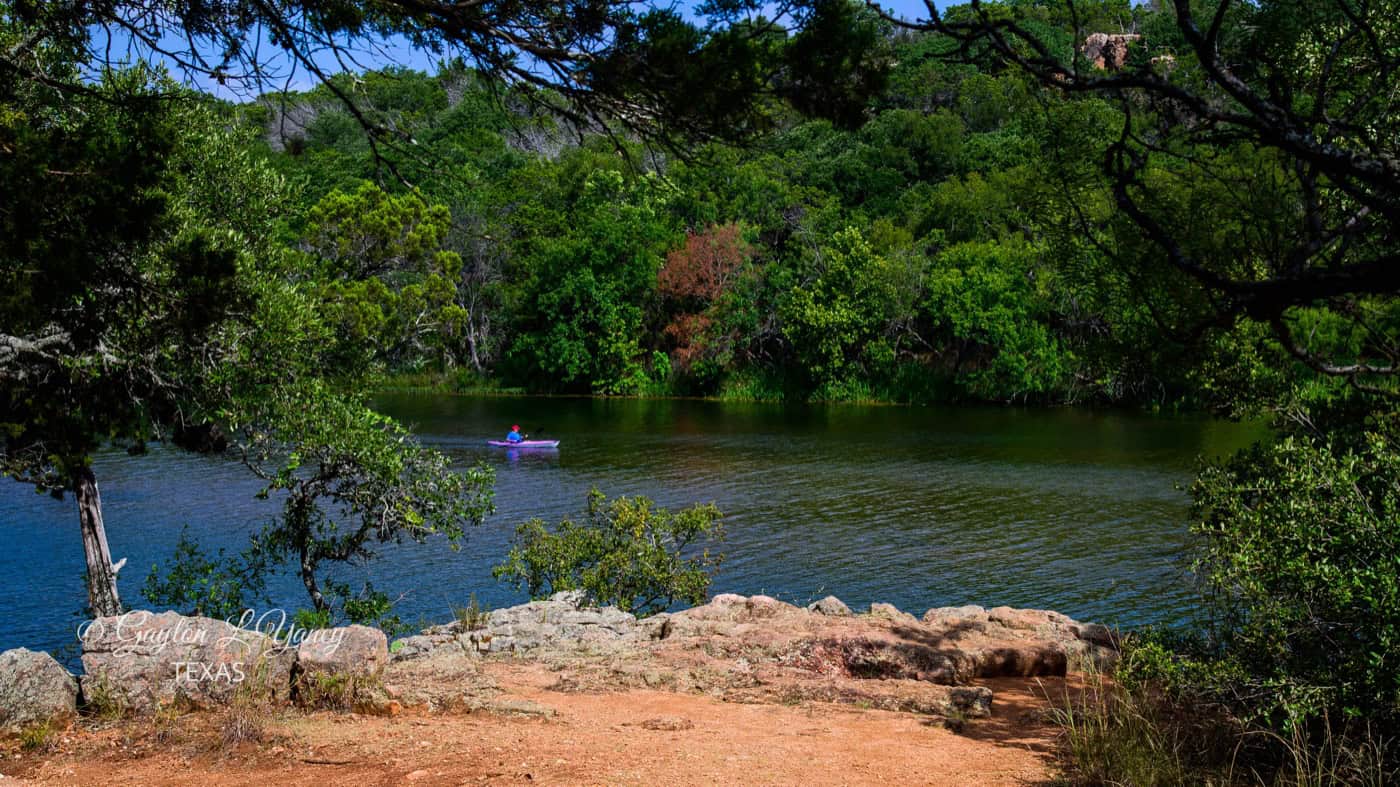
Paddling is one of the main draws at Inks Lake State Park. TPWD sets aside a large no-wake zone for kayaks, canoes and paddleboards, and the lake stays close to the same level all year, so swimming, boating and fishing usually carry on through droughts.
- Rentals: the park store rents paddle boats, canoes, single and double kayaks and stand-up paddleboards, with life vests and paddles. TPWD lists $20 for the first hour and $10 for each additional hour
- Rental hours: daily 8:30 a.m. to 3 p.m., weather permitting; all boats back by 4 p.m.
- Life jackets: children under 13 must wear one while boating
- Where to paddle: Devil’s Waterhole is about an hour’s round trip with kids, according to one visitor. Stumpy Hollow, with treetops above the water, is another popular stop
- Own boat: the boat ramp sits next to the park store. Boating, water skiing and scuba diving are allowed outside the no-wake zone. Clean, drain and dry boats to stop invasive species
- Wind: afternoon wind can make the open lake rough for kayaks
Hiking Trails
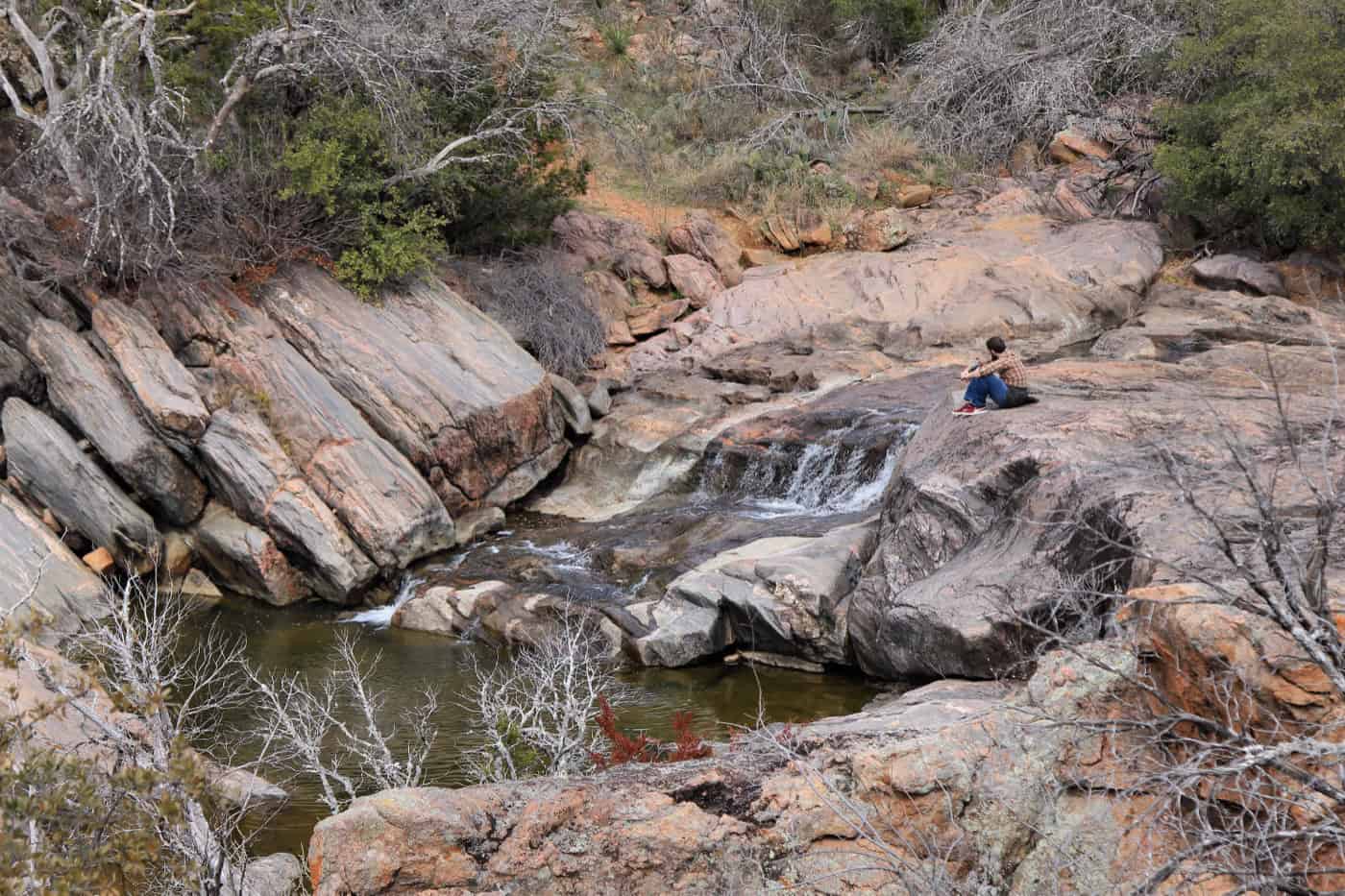
The trails at Inks Lake State Park are short and mostly easy to moderate, with granite outcrops, lake views and creek canyons. TPWD’s pages give anywhere from 9 to over 12 miles of trails; the named trails on its trail list add up to about 9.5 miles.
| Trail | Miles | Difficulty |
|---|---|---|
| Devil’s Waterhole Nature Trail (parking lot to the waterhole) | 0.2 | Easy |
| Valley Spring Creek Trail (from Devil’s Waterhole past the waterfall, loops back) | 0.9 | Easy |
| Upper and Lower Angler’s Trails | 0.5 each | Easy |
| Lake Trail (Stumpy Hollow and seasonal pools; stay out of the pools) | 1.5 | Easy to moderate |
| Bluebonnet Trail | 0.6 | Moderate |
| Devil’s Backbone Nature Trail (links Valley Spring Creek Trail and the bird blind) | 1.3 | Moderate (TPW Magazine: challenging) |
| Pecan Flats Trail (overlook toward Buchanan Dam) | 1.8 | Moderate |
| Woodland Trail (rugged, mostly unshaded) | 2.2 | Moderate |
One-way distances as TPWD publishes them.
Trail Tips
Hikers at Inks Lake report the same few things.
- Markers: trail markers are hard to follow across bare granite, and the colors on the map don’t always match the markers. Several reviewers got off trail. Carry the TPWD trail map or a GPS app
- Strollers: the first 0.75 mile of the Pecan Flats Trail is level pecan forest that works for strollers, then it climbs
- Summer overgrowth: overgrowth and sticker burrs on Pecan Flats, Bluebonnet and Woodland, so long socks or boots help
- Wildflowers: spring is the best season, when bluebonnets and other wildflowers line the Pecan Flats Trail
- Bird blind: the wildlife viewing station sits 2 miles north of headquarters on Park Road 4. Get the gate code at headquarters. Visitors report hummingbirds and cardinals at the feeders
Fishing
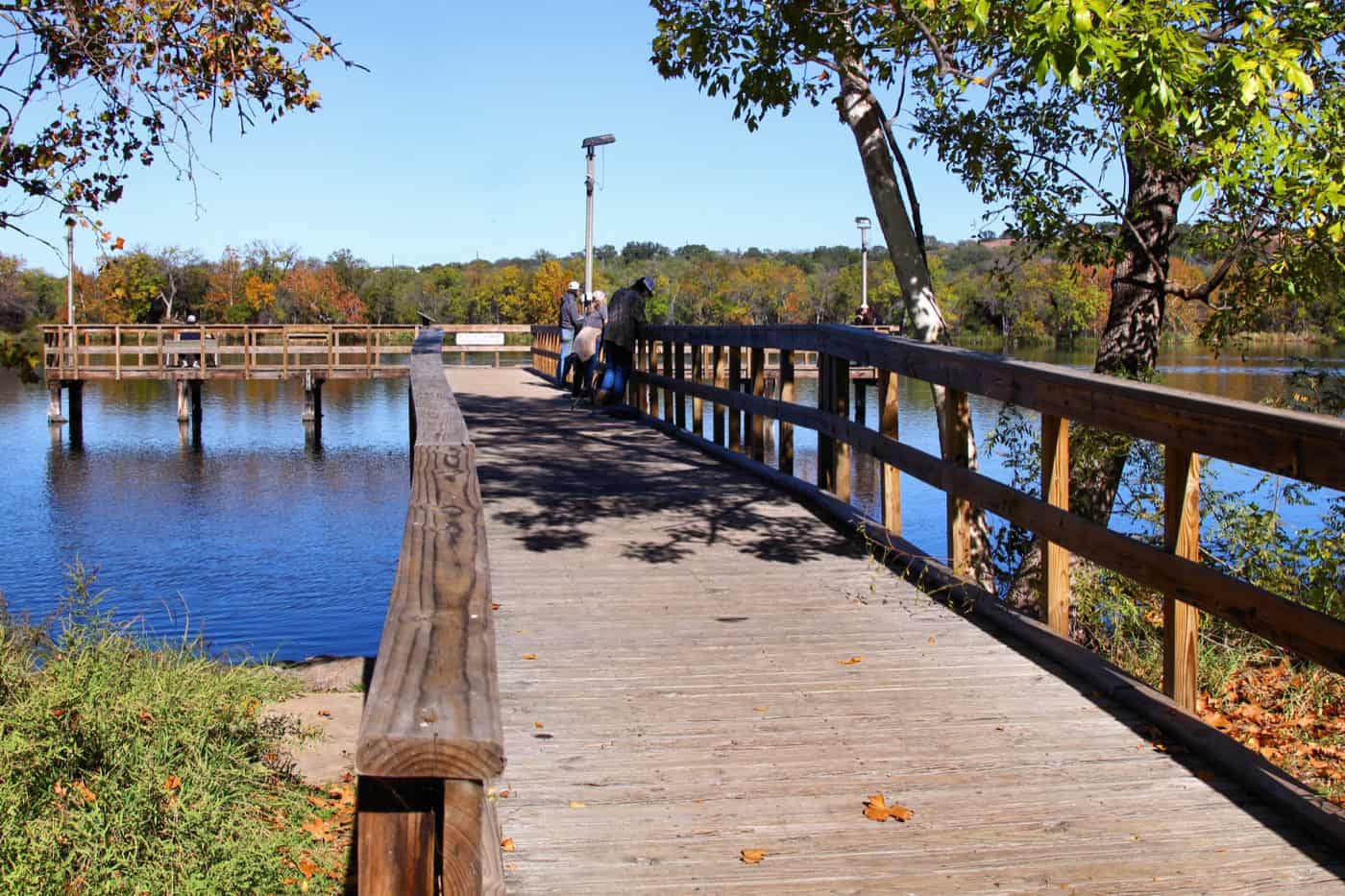
No fishing license is needed to fish from the shore or a pier inside a Texas state park. Inks Lake State Park has two wheelchair-accessible fishing piers, fish-cleaning stations and a boat ramp.
- Species: largemouth, Guadalupe, white and striped or hybrid bass, channel, blue and flathead catfish, crappie and sunfish
- Loaner gear: rods, reels and tackle boxes can be borrowed free
- From a boat: regular Texas fishing license rules apply
- Pier limit: two poles per person
- Night fishing: the pier lights were removed, and night anglers in reviews miss them
Camping
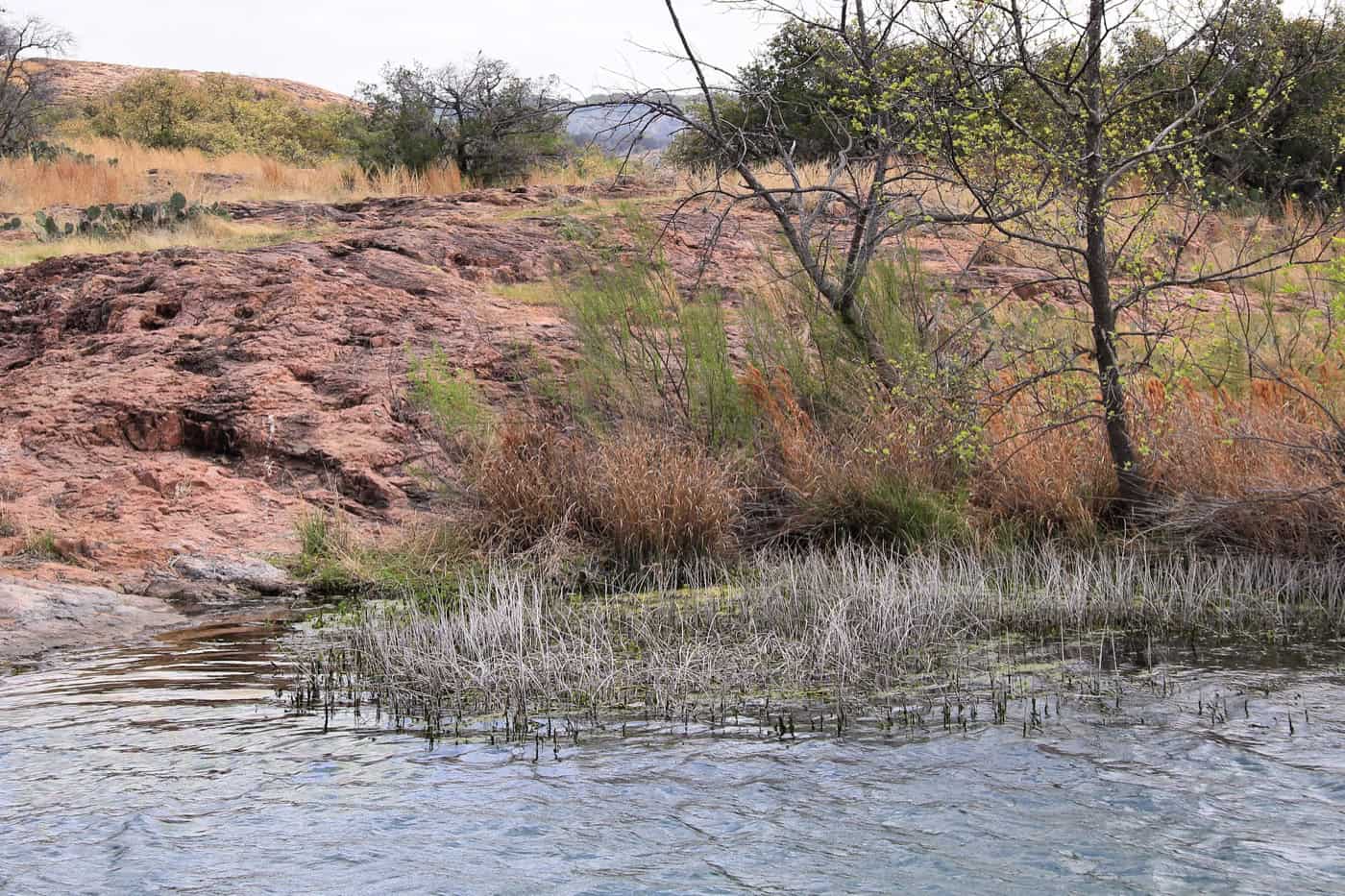
Inks Lake State Park has about 170 campsites, many of them on or near the water, from electric hookup sites to hike-in primitive sites. TPWD’s campsite page lists four types, and the Texas State Parks reservation system groups them into loops.
Campsite Types
Prices are TPWD’s per-night rates, plus entry fees.
- Electric sites (114, $23): water and 30/50-amp electric, picnic table, fire ring or grill, restrooms with showers nearby. Only some sites have 50-amp service
- Walk-in tent sites with electricity (4, $21): sites 219 to 222. A walk-in site is a tent site a short walk from parking, here about 100 feet. 20-amp electric, no RVs, up to 4 people
- Water-only sites (42, $16): sites 300 to 349, with a water spigot and no electricity. One RV under 26 feet per site; generators aren’t allowed
- Primitive sites (9, $11): hike-in sites A to I off the Pecan Flats Trail. A primitive site has no water, electricity or restrooms; these are a 1.58-mile hike in, with a primitive toilet on the trail. No ground fires and no pets
Camping Loops
The reservation system sorts the sites into five areas.
- Central: most of the electric sites in the 211 to 289 range, plus the 4 walk-in tent sites
- West Loop: electric sites 41 to 82 and 210
- North Loop: electric sites 83 to 94 and the group picnic pavilion
- Far West: all the water-only sites (300 to 349), on the more private west side of the park
- Pecan Flats Trail: the hike-in primitive sites and the youth group camp
Best sites for water access: TPW Magazine names sites 233, 235, 236, 263, 264, 267, 268 and 270. Visitors also like 210 for shade and lake views, 333 for lake access, and the 300s for a quieter feel. Several say they launch kayaks straight from their site.
RVs: there are no full-hookup (sewer) sites. RVs use the electric sites or the water-only sites, and a dump station serves the campground. Electric-site driveways run from 24 to 71 feet; almost all are back-in, with 3 pull-throughs.
Reservations and Camp Rules
Campsites and cabins book up to 5 months ahead, and weekends and holidays sell out.
- Reserve through Texas State Parks reservations or by phone at (512) 389-8900, and check the TPWD campsites page for current fees
- Up to 8 people per site (4 at walk-in and primitive sites)
- Check-out is noon
- Late arrivals use the gate code from their confirmation email and check in at headquarters the next morning between 8:30 and 9:30 a.m.
- Campsites with more than 2 vehicles pay $6 a night for each extra vehicle
The most common camping complaint is sites packed close together, and a few pads are worn or uneven.
Cabins
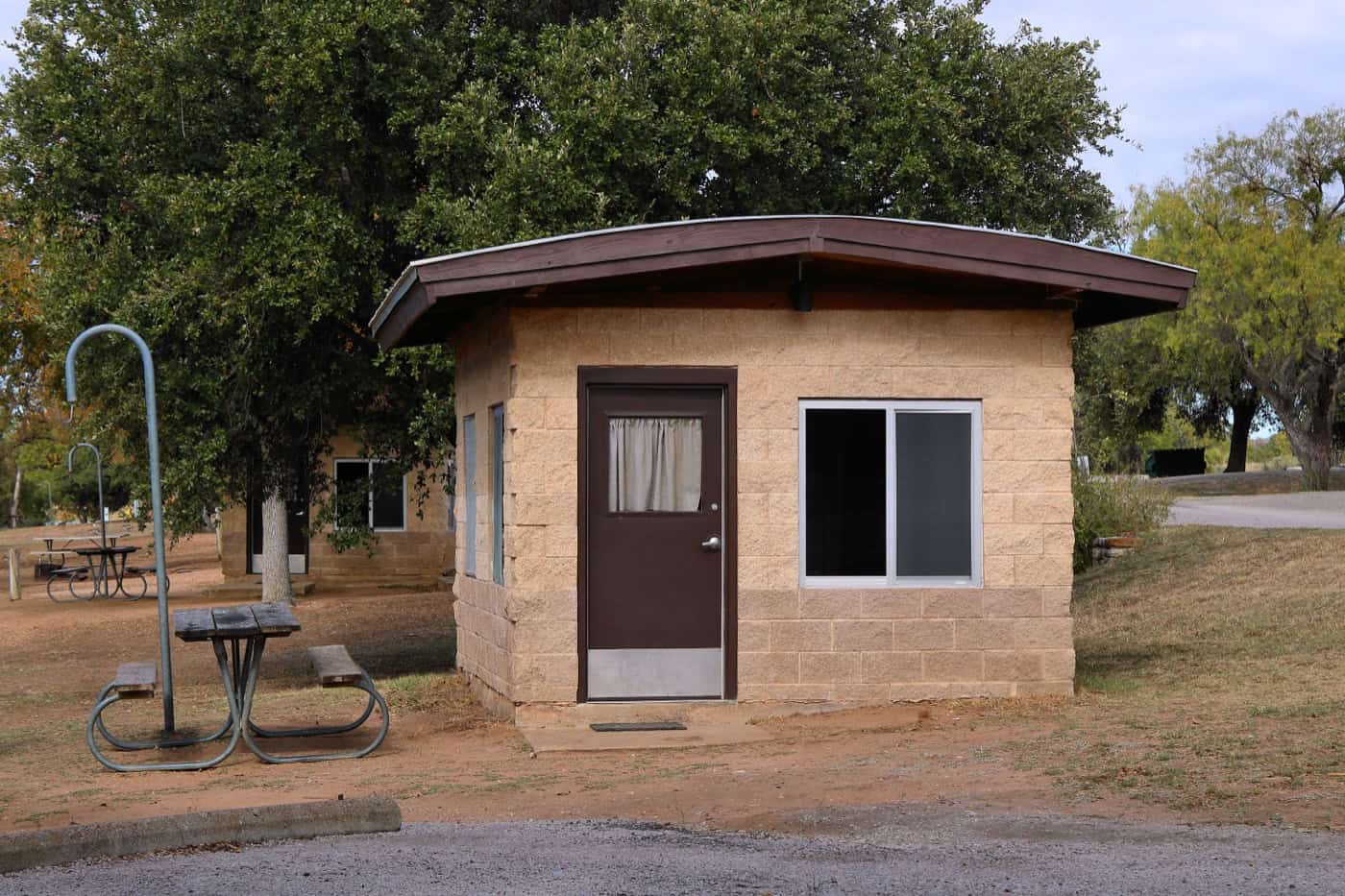
The 22 cabins at Inks Lake State Park are simple one-room buildings with air conditioning, a ceiling fan, a picnic table and water at the site. Each sleeps 4 on two sets of twin bunks and costs $55 a night.
- No bathroom inside; restrooms with showers are nearby
- No linens and no cooking inside. Bring bedding and a camp stove
- No pets anywhere in the cabin area
- $25 cleaning deposit; 2-night minimum on weekends and listed holidays
- Check-out is 11 a.m.
- Visitors mention one indoor outlet, so a power strip helps
- Camp Longhorn, across the water from cabins 7 to 10, runs a loudspeaker through the day from May to August, according to one reviewer
Cabins book up fast on weekends; Sunday to Thursday nights are easier to get. Details are on the TPWD lodging page.
Best Time to Visit
Spring is the best season at Inks Lake State Park, with wildflowers and mild weather from March to May. TPWD calls spring, summer and fall the busy season, so weekdays any time of year bring fewer people.
- Spring (March to May): bluebonnets, Indian blankets and Indian paintbrush bloom, and wildflowers line the Pecan Flats Trail. May is one of the wettest months
- Summer (June to August): the season for swimming. July highs average 98°F, swim areas and Devil’s Waterhole get packed on weekends, and algae can coat the lake bottom. Visit on weekdays if possible
- Fall (September to November): quiet camping. September and October are among the wettest months
- Winter (December to February): quiet camping, with January lows averaging 33°F. Public hunts close some trails and campsites on set December and January dates
What Visitors Say
Inks Lake State Park averages about 4.7 stars in Google reviews from the past two years, and many come from families who have returned for decades.
- Bathrooms: the most praised feature after the scenery. Visitors describe clean buildings, hot water and private shower rooms, several of them recently renovated
- Park store: called one of the best in the state park system for ice, firewood, snacks, tackle and gear
- Crowds: busy on weekends, holidays, spring break and summer. Swim areas and Devil’s Waterhole get packed on summer weekends; midweek is quiet
- Campsites: close together, with occasional noise from neighbors
- Wildlife: deer wander through the campsites, especially at dawn. Squirrels and raccoons raid unattended food
- Recent changes: a new headquarters and entrance opened in October 2025. Visitors in 2026 still reported debris from the July 2025 floods along parts of the shoreline
Getting There
Inks Lake State Park is at 3480 Park Road 4 West, Burnet. From State Highway 29, take Park Road 4 south for 3 miles to headquarters.
Drive times to the park:
- Austin: about 66 miles, about 1 hour 25 minutes
- San Antonio: about 107 miles, about 2 hours 15 minutes
- Dallas: about 208 miles, about 4 hours
- Houston: about 228 miles, about 4 hours 15 minutes
- Burnet: about 12 miles, about 20 minutes
A few things to know before driving out:
- New entrance: a new headquarters and entrance opened in October 2025
- Devil’s Waterhole parking: the lot holds only about 20 cars, and cars parked partly on the road get towed
Know Before You Go
Inks Lake State Park is rocky, busy and mostly open to the sun. These rules and tips matter most.
- Fees and passes: $7 a day for adults 13 and older; children 12 and under get in free. The $70 Texas State Parks Pass waives entry fees
- Booking: day passes open 1 month ahead, and day passes and campsites sell out every weekend and holiday; campsites and cabins open 5 months ahead
- Hours: the park is open 6 a.m. to 10 p.m.; headquarters and the park store are open daily 8:30 a.m. to 5 p.m.
- Dogs: 6-foot leash; not in swimming areas, buildings, the cabin area, the primitive area or the youth group camp
- Water and shade: water at campsites and cabins; none at the primitive sites. The Woodland Trail and the granite outcrops have little shade
- Difficulty: easy to moderate trails; the climb out of Devil’s Waterhole is steep for a short stretch
- Fires: a burn ban has been in force since Oct. 14, 2026 (propane stoves only)
- Hunts: public hunts close some trails, part of the West Loop and the primitive sites on set dates: Dec. 3 to 6, Dec. 14 to 17, Jan. 4 to 7, Jan. 11 to 14 and Jan. 18 to 21
- Cell signal: visitors report 5G service from AT&T and T-Mobile
- Leave No Trace: stay on the trails, store food from raccoons and pack out all trash
- What to bring: water shoes for the granite entries, long socks or boots for summer trails, the trail map, and bedding, a camp stove and a power strip for a cabin
Check conditions first: burn bans, hunt closures and algae blooms change what is open. Check the Inks Lake park alerts page or call (512) 793-2223 before driving out.
Nearby Parks
Several parks and guides are within about 2 hours of Inks Lake State Park.
- Longhorn Cavern State Park: about 7 miles south on Park Road 4, with guided cave tours of about 1.5 hours. See TPWD’s Longhorn Cavern page
- Inks Dam National Fish Hatchery: next door, free, open daily 7 a.m. to 3:30 p.m. (USFWS)
- Krause Springs: spring-fed swimming in Spicewood, about 50 minutes away
- Enchanted Rock: the big pink granite dome, about 1 hour 15 minutes away
- Pedernales Falls State Park: river and limestone falls, about 1 hour 15 minutes away
- Colorado Bend State Park: Gorman Falls and long trails, about 2 hours away
- More parks within reach of Austin: Parks Near Austin
FAQ
Is Inks Lake a constant-level lake?
Yes. The Lower Colorado River Authority keeps it within about 1 foot of its normal level most years, though big floods upstream can push it higher for a short time.
Is there an Inks Lake RV park?
Searches for an Inks Lake RV park often turn up private RV parks outside the state park; inside the park, RVs use the electric sites or the water-only sites, and none have sewer hookups.
Are there snakes at Inks Lake?
TPWD says venomous snakes live in the park but are rarely seen, and most snakes spotted near the water are non-venomous water snakes.
Sources and Official Links
Facts in this guide were last checked in October 2026 against these sources.
- Inks Lake State Park (TPWD)
- Entrance fees, campsites and cabins (TPWD)
- Park map (PDF) (TPWD)
- Park alerts (TPWD)
- Texas State Parks reservations
Featured photo: Larry D. Moore, Wikimedia Commons (CC BY 4.0)
Get More Texas Outdoor Adventure Tips
Subscribe to get more places to explore in the great outdoors of Texas. We’ll never share your email. Unsubscribe any time.