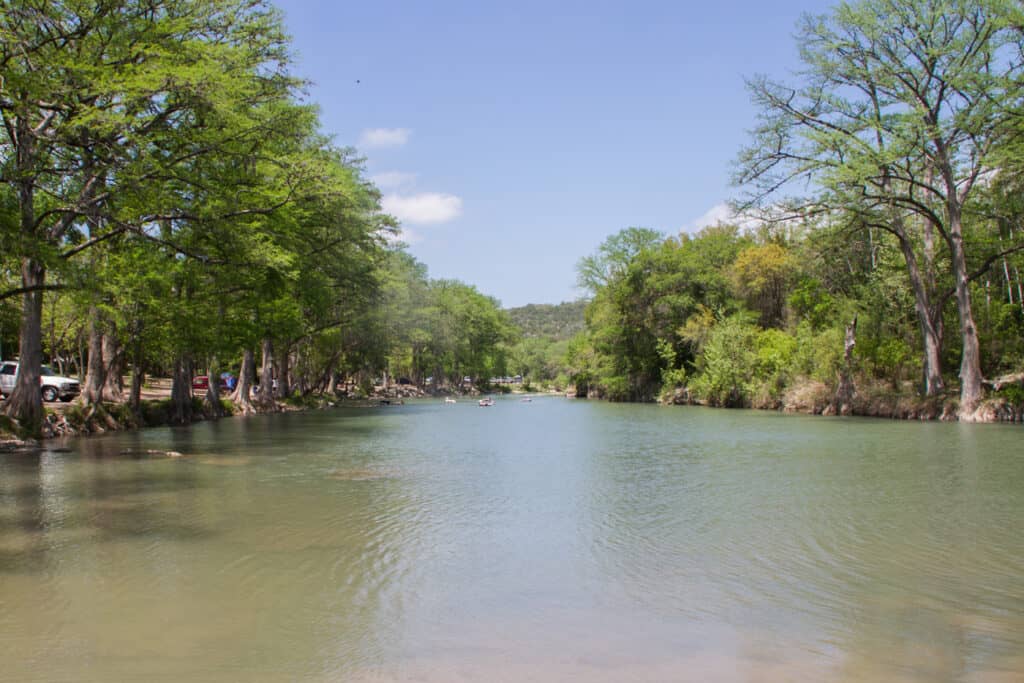
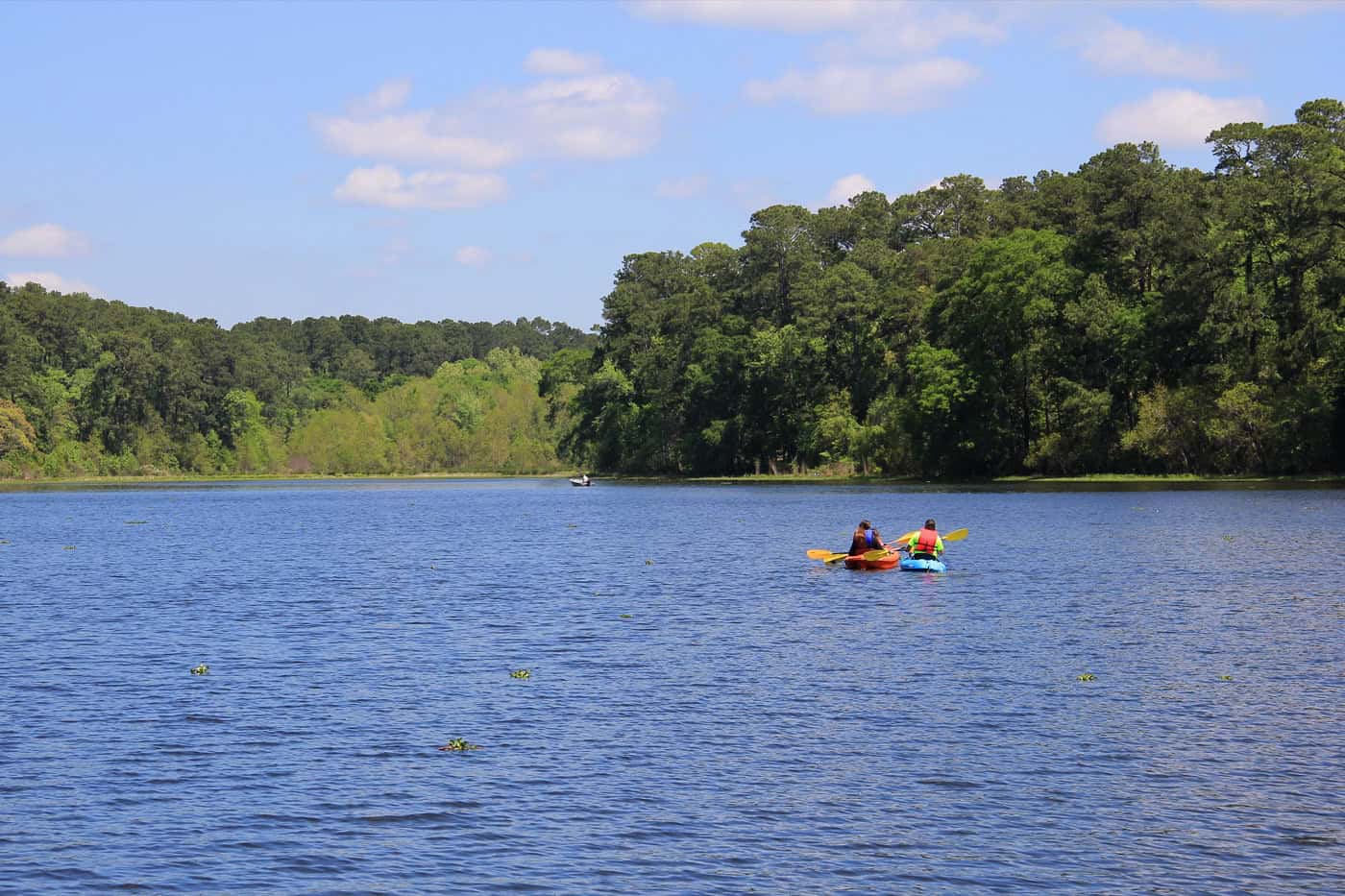
Huntsville State Park sits in the East Texas Piney Woods of Walker County, just off I-45 south of the town of Huntsville and about 1 hour 15 minutes north of Houston. It’s best known for camping under tall loblolly pines beside Lake Raven. The park often fills on weekends, so a reserved day pass is the surest way in.
At a Glance
- Drive time: about 1 hr 15 min from Houston, 3+ from Dallas
- Entry fee: $7 adults; 12 and under free
- Hours: 6 a.m. to 10 p.m. daily
- Reservations: day pass advised; weekends often fill
- Dogs: yes, on a 6-foot leash; not in the swim area
- Swimming: Lake Raven swim area only; no lifeguards
- Camping: 154 hookup sites, 28 shelters, 2 cabins
- Best time: spring and fall; December is quietest
- Hunt closures: Dec. 4 to 9 and Jan. 11 to 14
- Run by: TPWD, (936) 295-5644
On This Page
- Lake Raven: Swimming, Paddling and Boating
- Hiking and Mountain Biking Trails
- Fishing Lake Raven
- Camping
- Cabins, Screened Shelters and Raven Lodge
- Alligators and Wildlife
- Best Time to Visit
- What Visitors Say
- Getting There
- Know Before You Go
- Nearby Parks
- FAQ
- Sources and Official Links
Lake Raven: Swimming, Paddling and Boating
Lake Raven, the center of Huntsville State Park, covers about 210 acres and is fed by three creeks. Swimming is allowed only in the designated swim area, from 10 a.m. to 8 p.m., with no lifeguards.
Swimming
The swim area is the only place in the lake where swimming is allowed.
- No pets or glass in the swim area
- Kids enjoy it, but summer 2026 reviews mention algae along the edge, and some families skip it because of alligators
- TPWD advises against swimming at dusk, dawn or night
Paddling and Boating
Motorboats run at idle speed only, which keeps Lake Raven calm for paddlers.
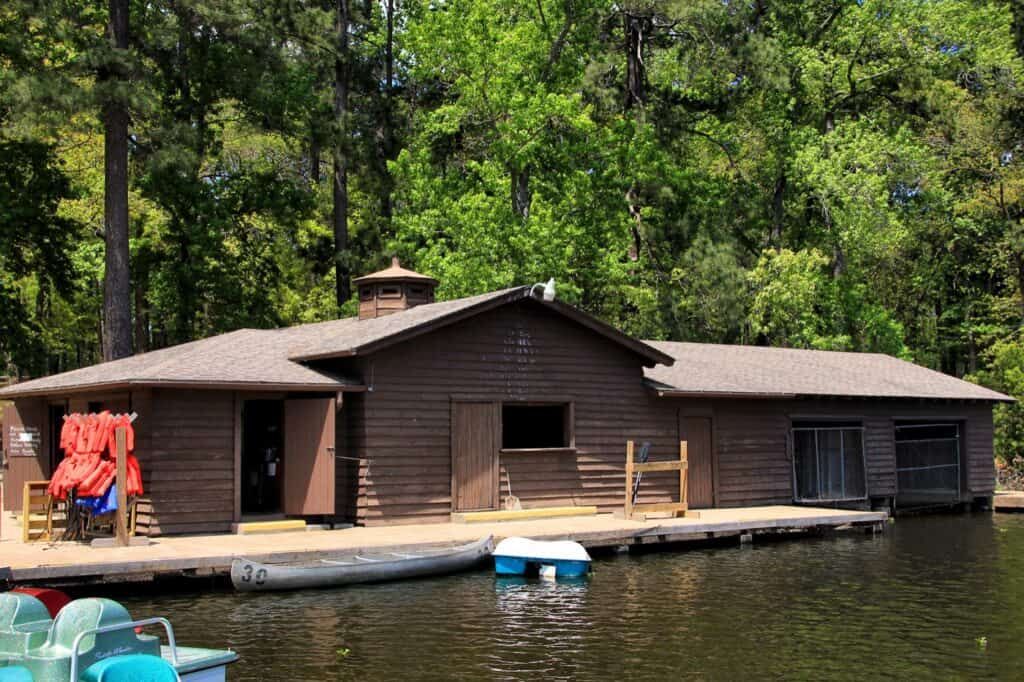
- Rentals: TPWD lists self-service kayak rentals near Raven Lodge and mentions canoes; recent visitors also rented pedal boats and paddleboards. TPWD publishes no prices, and rentals weren’t running on at least one winter Saturday, so call ahead
- Boat ramp: a two-lane ramp handles most boats
- Life jackets: children under 13 must wear one
Hiking and Mountain Biking Trails
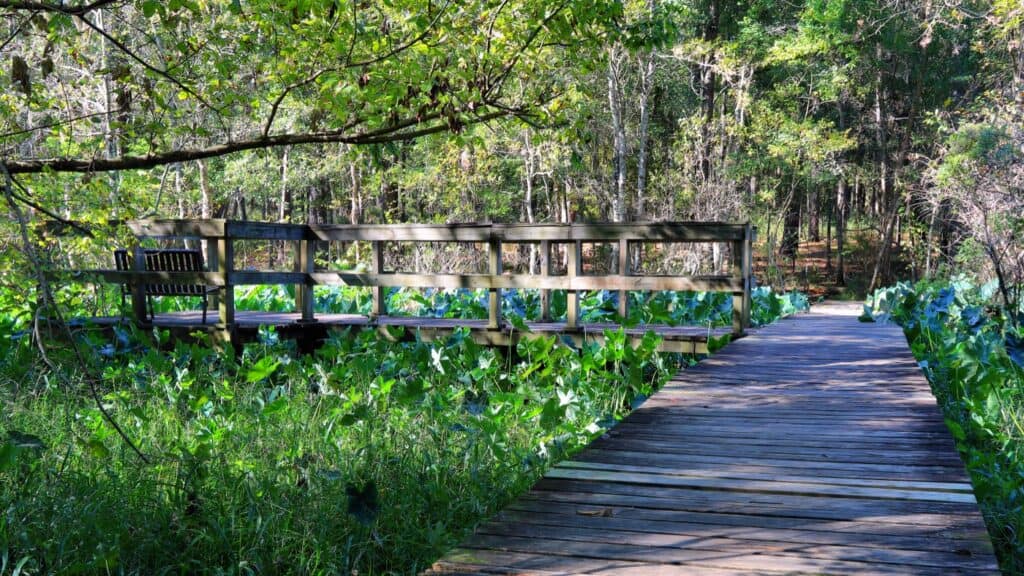
Huntsville State Park has about 21 miles of trails through pine and hardwood forest, open to hikers and mountain bikers unless marked otherwise. The park covers 2,083 acres next to the Sam Houston National Forest, and most trails are shaded, with roots and short hills.
| Trail | Miles | Difficulty |
|---|---|---|
| Triple C Trail (longest; one section closed for erosion) | 8.4 round trip | Challenging |
| Chinquapin Trail (circles Lake Raven past marshes) | 6.9 round trip | Challenging |
| Dogwood Trail (shaded; families call it easy) | 1.8 | Moderate |
| Prairie Branch Loop (half of it follows the lakeshore) | 1.5 round trip | Moderate |
| Coloneh Trail (leads to the bird blind) | 0.8 | Easy |
| Loblolly Trail (loops from the nature center) | 0.2 round trip | Easy |
TPWD doesn’t say whether the Dogwood and Coloneh distances are one way or round trip. Boardwalks cross the marshy headwaters on the north side of the lake.
Trail Tips
A few things make the trails at Huntsville easier.
- Closures: the March 2026 trail map shows part of the Triple C Trail closed for erosion, so it isn’t a full loop. Trails also closed for months after the 2024 floods and Hurricane Beryl, and for prescribed burns in spring 2025 and March 2026. Check the TPWD alerts page before a long hike
- Navigation: trails cross often and the markers are small. Carry the trail map
- Mountain biking: riders call the singletrack fun and beginner-friendly, with loose sand on some Chinquapin curves. Some segments are hiking only. Wear a helmet and stay off the trails for a few days after heavy rain
- Longer hikes: the 129-mile Lone Star Hiking Trail through the Sam Houston National Forest can be reached from the park, hikers only
Fishing Lake Raven
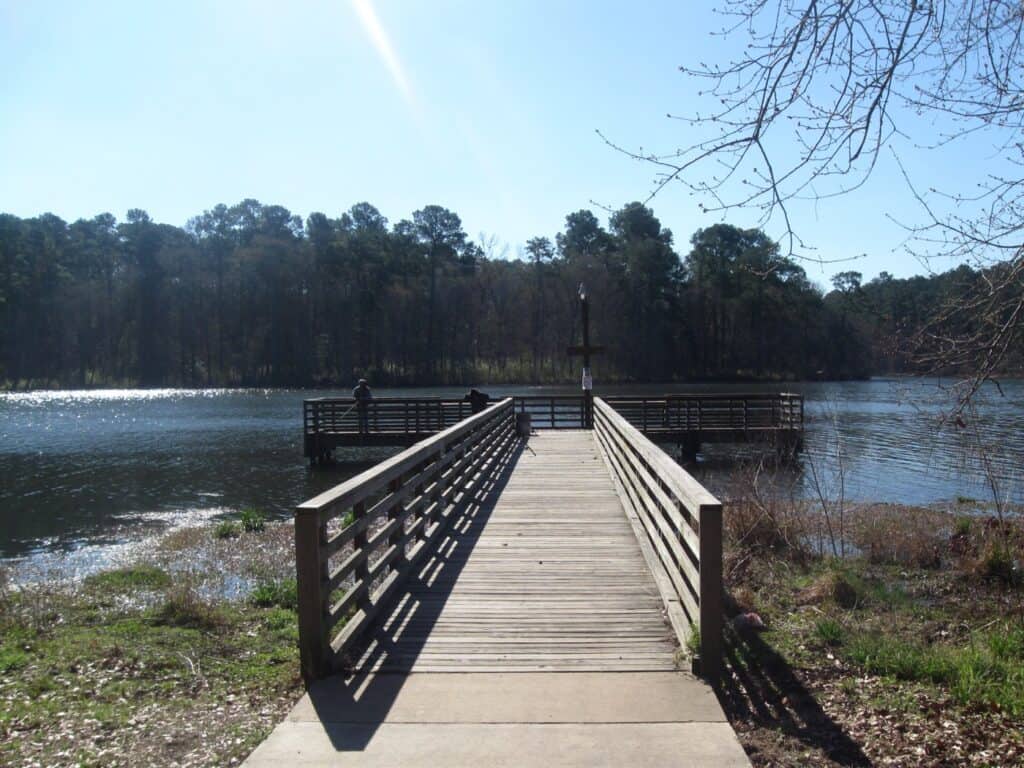
No fishing license is needed at Lake Raven, because it’s inside Huntsville State Park. Largemouth bass, bluegill and redear sunfish are the main catch, with crappie and catfish too.
- Piers: several fishing piers, including accessible ones at the boat ramp and Prairie Branch, plus fish-cleaning stations
- Limits: pole and line only, two poles at most. Bass 16 inches or shorter may be kept, 5 a day. Confirm in TPWD’s Lake Raven regulations
- Alligator rule: no stringers on the piers, because they attract alligators. Keep the catch in a bucket
- Conditions: hydrilla, a dense water weed, makes bank fishing hard in many spots. Reviews often mention slow catching; one tip is bass near the dam
Camping
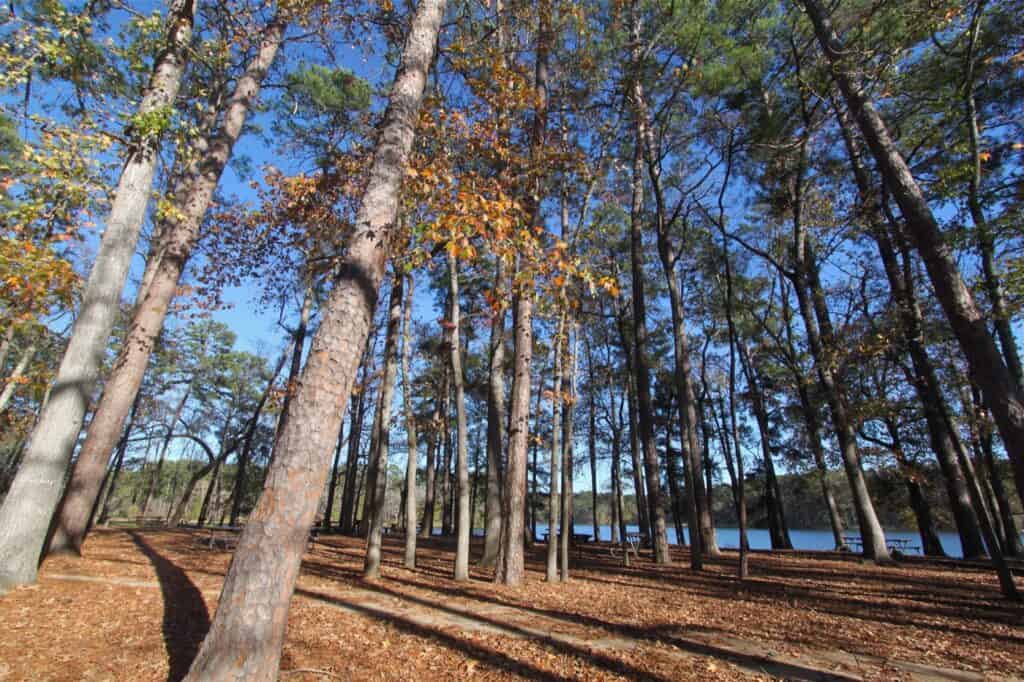
Huntsville State Park has hookup camping only: TPWD lists 154 campsites in three camping areas, with 23 full-hookup, 77 water and electric, and 54 water-only sites. Every site has a picnic table, fire ring and lantern post, with restrooms and showers nearby. There are no primitive, hike-in or equestrian sites.
Campsite Types
Prices are TPWD’s per-night rates, plus entry fees.
- Raven Hill full hookup (sites 1 to 25, $25): water, sewer and 20/30/50-amp electric, pull-through. The only full-hookup area, built for RVs on mostly paved sites. Campers say many face Lake Raven. Some sites may not fit tents
- Coloneh water and electric (sites 26 to 59, $20): water and 20/30/50-amp electric in the largest area. Sites 32 and 33 are tent-only electric sites, and the bird blind is half a mile down the Coloneh Trail
- Coloneh water-only section (sites 60 to 121, $15): a shared water faucet and no electric
- Prairie Branch water and electric (sites 123 to 157, $20): back-in sites with 20/30/50-amp electric and an accessible fishing pier. Site 157 is tent-only. Some sites sit on the water, but a public path to the pier runs behind site 151
- Accessible sites: 24, 36, 38, 50, 65, 74, 75, 76, 109, 118, 129, 131, 138 and 155. Most are booked by phone
- RV length: TPWD lists vehicles up to 60 feet; check each site’s length on the booking site
The top complaint in recent reviews is slope. Many sites tilt side to side and front to back, and large RVs often need extra leveling blocks. Reviewers named Coloneh site 26 and site 117 as especially steep. Check site photos when booking and pack extra blocks.
Reservations and Camp Rules
Sites book up to 5 months ahead, from 8 a.m., and Friday or Saturday stays need a two-night minimum.
- An overnight reservation covers park entry. Entry fees are added per person to the nightly fee, cabins included
- Up to 8 people may stay on a site, with an extra vehicle fee beyond two vehicles
- Check-in is 2 p.m. and check-out is noon. Late arrivals should call the park at (936) 295-5644 before 5 p.m.
- Quiet hours run 10 p.m. to 6 a.m.
- There’s a dump station for RVs
Most campers find the bathhouses clean, with hot showers, though some are dated, and one 2026 review reported no hot water at Prairie Branch for months.
Cabins, Screened Shelters and Raven Lodge
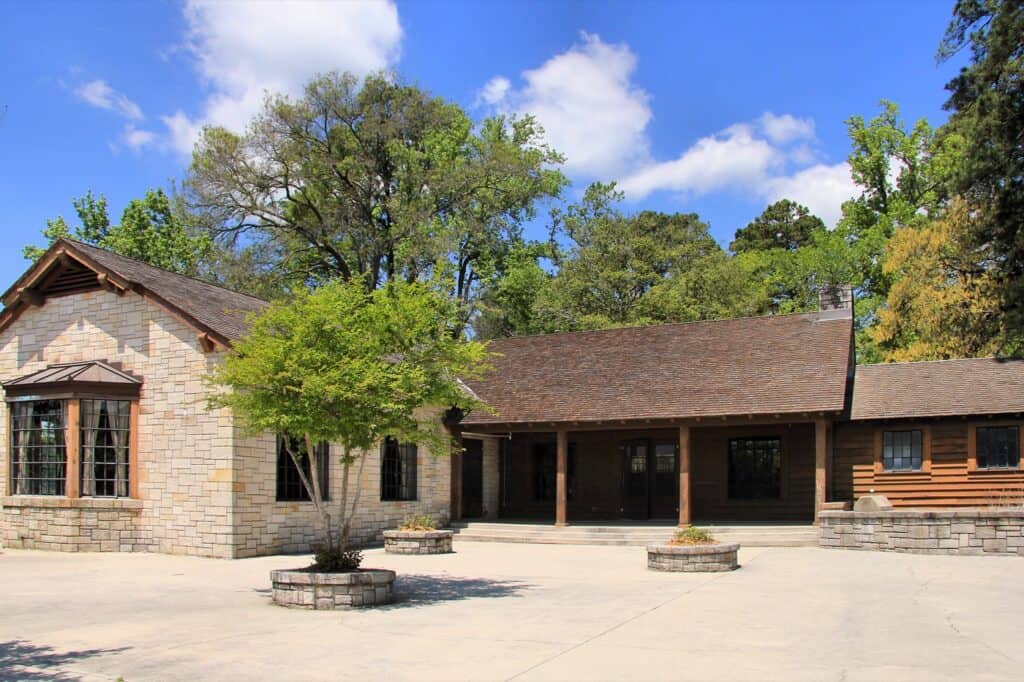
Huntsville State Park has no lodge rooms to rent. The overnight options with walls are 2 air-conditioned cabins and 28 screened shelters, and Raven Lodge is a group hall for events.
- Cabins: $60 a night plus entry, up to 8 people. Air conditioning, heat, electricity and a picnic table, with a grill and fire ring outside. No bathroom inside and no pets; a $50 refundable deposit is due at check-in
- Screened shelters: $30 a night plus entry, up to 8 people. A 12-by-18-foot screened room with a concrete floor and picnic table, plus water and 30/50-amp hookups outside. No air conditioning; pets stay outside
- What to bring: TPWD lists no beds or cots, so bring bedding and sleeping pads. Shelters have no deadbolts and the park doesn’t sell padlocks, so bring a lock
- Raven Lodge: a 4,000-square-foot group hall with a kitchen for up to 100 people, $500 a day plus entry. A screened pavilion holds 75 for $50 a day. Both book up to 12 months ahead at (512) 389-8920
A Civilian Conservation Corps company of African-American veterans began building the park in 1937, including the dam, the boathouse and the 1939 lodge. The dam collapsed in 1940 after 12 inches of rain in two days and had to be repaired, so the park didn’t open until May 18, 1956.
Alligators and Wildlife
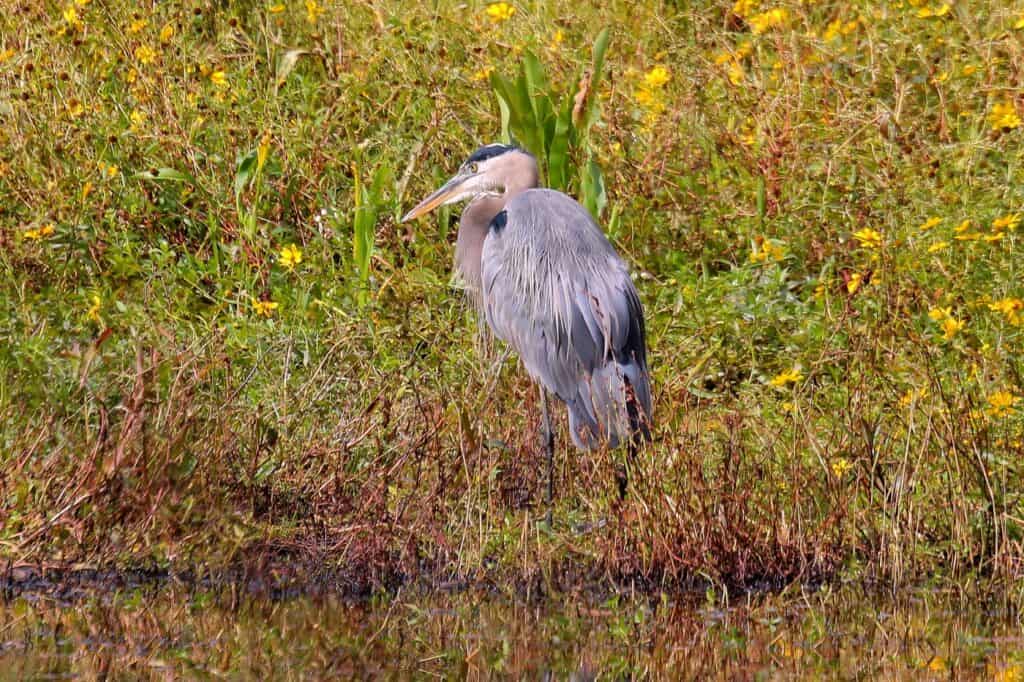
Yes, there are alligators at Huntsville State Park. TPWD says a few live in the wetlands, and visitors often spot young ones near the fishing piers.
- Stay at least 30 feet away. Feeding them is a Class C misdemeanor with fines up to $500
- If one takes bait or a hooked fish, cut the line and move
- Report any alligator near the swim area to staff
- The nature center keeps live animals and hosts ranger Gator Talks
About 250 bird species have been recorded, with warblers peaking in late April and early May. TPWD names pileated woodpeckers and bald eagles along the trails, and visitors often see deer on the Chinquapin Trail. Raccoons open tents and coolers at night, so store food in a vehicle.
Best Time to Visit
Spring and fall are the best seasons at Huntsville State Park: spring for birds and mild hikes, fall for cooler camping. TPWD’s busy season runs from mid-February to Thanksgiving, so weekdays and December are much quieter.
- Spring (March to May): mild hiking weather, and warblers peak in late April and early May. Prescribed burns closed trails in spring 2025 and March 2026
- Summer (June to August): July highs average 90°F. The pines shade most trails, and summer 2026 reviews mention algae at the swim area
- Fall (September to November): cooler camping weather, so book early. September is the wettest month, and campers say fall burn bans in 2025 and 2026 ruled out charcoal as well as wood
- Winter (December to February): the quietest season. January lows average 50°F, and public hunts close the park on set December and January dates
What Visitors Say
Huntsville State Park averages 4.7 stars from more than 4,800 Google reviews. TrekTexas read 400 Google reviews from September 2025 to October 2026, plus Tripadvisor, The Dyrt and Reddit threads back to late 2024. The same themes keep coming up.
- Piney woods near the city: tall pines, shade and hills feel unlike most parks around Houston
- Good trails: well marked and well kept, though roots make even easy trails bumpy
- Unlevel campsites: scenic, but many tilt; RV owners bring extra blocks
- Showing its age: some restrooms are dated or out of service, and the swim area gets algae in summer
- Crowds: busy on weekends, spring and fall. Sites on the east side, nearest I-45, hear highway noise
- Staff: mostly friendly, though some reviewers describe strict enforcement of alcohol and noise rules
- Barking dogs: a repeat campground complaint at night
- Park store: Gator Junction has ice, firewood and bait but is thin on camping supplies and souvenirs
- Burn bans: campers say fall burn bans in 2025 and 2026 ruled out charcoal as well as wood. Pack a propane stove
Getting There
Huntsville State Park is at 565 Park Road 40 W, Huntsville, TX 77340, about 6 miles southwest of Huntsville. From I-45, take exit 109 and follow Park Road 40 into the park.
Drive times to the park:
- Houston: about 65 miles, about 1 hour 15 minutes without traffic
- Austin: about 165 miles, about 3.5 hours
- Dallas: about 180 miles, about 3 to 3.5 hours
- San Antonio: about 235 miles, about 4.5 to 5 hours
A few things to know before driving out:
- Capacity: TPWD says Huntsville often reaches capacity. When it’s full, the gate closes to drop-in visitors, most often on Saturdays, Sundays, holidays and school breaks
- Day passes: reserve on the Texas State Parks reservation site or at (512) 389-8900. Passes go on sale 30 days ahead, and any left are sold at the park. One online pass covers up to 8 people in one vehicle, and cancellations are free up to 5 days before the visit
- Entry time: the booking site lists a 6 a.m. to 3 p.m. day-entry pass, while the park is open 6 a.m. to 10 p.m. Check the time window on the pass when booking
- Entrance line: on busy days the entrance runs one lane, so expect a wait behind RVs
Know Before You Go
Huntsville State Park is busy, shaded and home to alligators. These rules and tips matter most.
- Fees and passes: $7 a day for adults 13 and older; children 12 and under get in free. The $70 Texas State Parks Pass covers the holder and guests, who can reserve day passes at no cost
- Booking: day passes open 30 days ahead, and the park often fills on weekends, holidays and school breaks; campsites, shelters and cabins open 5 months ahead
- Hours: the park is open 6 a.m. to 10 p.m. daily; headquarters is open Monday to Thursday 8 a.m. to 4:30 p.m., with extended weekend hours
- Dogs: welcome on the trails and in the campgrounds on a leash no longer than 6 feet. Not allowed in the swim area, cabins, Raven Lodge or any park building, and at screened shelters they stay outside. Keep dogs back from the shore and out of the water because of alligators. Dogs can earn a BARK Ranger badge
- Alligators: stay at least 30 feet away, never feed them, and report any near the swim area to staff
- Water and shade: pines shade most trails; carry plenty of water on the long ones
- Difficulty: easy on the Loblolly and Coloneh trails; long, rooty and hilly on Triple C and Chinquapin
- Rules: no public alcohol; fires only in fire rings and grills; check for burn bans
- Hunts: public hunts close the whole park from 3 p.m. Dec. 4 to 6 a.m. Dec. 9 and from 3 p.m. Jan. 11 to 2 p.m. Jan. 14
- Wildlife: raccoons open tents and coolers at night, so store food in a vehicle
- Supplies: the Gator Junction store sells ice, drinks, groceries and basic gear; Huntsville is about 15 minutes away
- What to bring: the trail map, extra leveling blocks for an RV, bedding and a lock for a shelter or cabin, and a propane stove in case of a burn ban
Check conditions first: the park closes for public hunts and when it reaches capacity, and trails close after floods and for prescribed burns. Check the Huntsville State Park alerts page or call (936) 295-5644 before driving out.
Nearby Parks
Three other TrekTexas guides are within about 90 miles of Huntsville State Park.
- Sam Houston National Forest: next to the park and home to the Lone Star Hiking Trail
- Lake Livingston State Park: about 50 miles east
- Davy Crockett National Forest: about 90 miles northeast
- More parks within reach of Houston: Parks Near Houston
FAQ
Is Huntsville State Park a national park?
No. It’s a Texas state park run by Texas Parks and Wildlife (TPWD), next to the Sam Houston National Forest, with the same fees and reservations as other Texas state parks.
Is there a lodge to stay in at Huntsville State Park?
No. Raven Lodge is a group hall for events; overnight stays are in campsites, screened shelters or the 2 cabins.
Is a fishing license needed at Huntsville State Park?
No. Fishing in Lake Raven inside the park doesn’t require a license, but the posted bag and length limits still apply.
Sources and Official Links
Facts in this guide were last checked in October 2026 against these sources.
- Huntsville State Park (TPWD)
- Entrance fees and campsites (TPWD)
- Trail map (PDF) (TPWD)
- Park alerts (TPWD)
- Lake Raven fishing regulations (TPWD)
- Texas State Parks reservations
Featured photo: Larry D. Moore, Wikimedia Commons (CC BY 4.0)
Get More Texas Outdoor Adventure Tips
Subscribe to get more places to explore in the great outdoors of Texas. We’ll never share your email. Unsubscribe any time.